
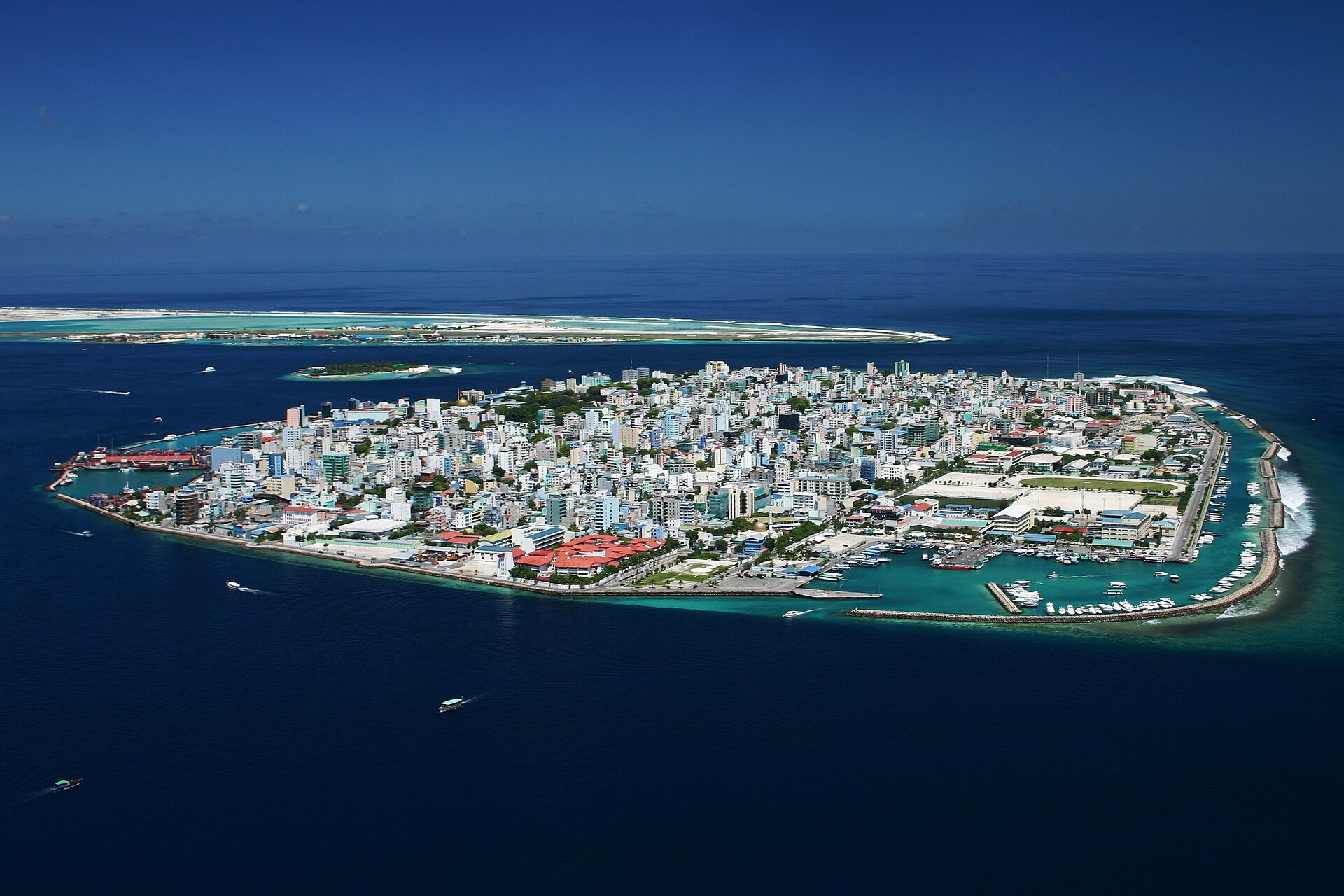
Greater Malé
Malé, Hulhumalé, Villimalé and the airport island: how the Maldives’ gateway works for arrivals, transit nights and a taste of city life.
Photo: Shahee Ilyas, CC BY-SA 3.0, via Wikimedia Commons
Greater Malé is the gateway to the Maldives: the capital island of Malé, the airport island of Hulhulé, the reclaimed island of Hulhumalé and the residential island of Villimalé, all within a few kilometres of each other on the southern edge of North Malé Atoll. Nearly every international visitor passes through, usually on the way to somewhere else.
This region guide explains what each island offers, how they connect, why a night here is often the simplest answer to seaplane and ferry timings, and what to expect from city life in one of the world’s most densely populated capitals. It links to the detailed guides for Malé and Hulhumalé & Airport.
Greater Malé at a glance
- Atolls covered
- Malé City, geographically part of North Malé Atoll (Kaafu)
- Main destinations
- Malé (incl. Villimalé) and Hulhumalé & Airport (incl. Hulhulé)
- From Malé
- The islands are linked by bridge, causeway, ferry and bus
- Suggested stay
- Half a day to two nights
- Best time
- Year-round; January to March is usually driest
- Known for
- Velana airport, transit stays, the Old Friday Mosque, markets and city life
In this Greater Malé guide
Why visit Greater Malé
Most travellers experience Greater Malé as logistics: a terminal, a jetty, a hotel for one night. That is a legitimate use of it, and this guide takes it seriously. But the region is also the only place in the Maldives where you see the country as a nation rather than a holiday: its government, its main mosques, its markets and the harbours through which almost everything reaches the atolls.
Malé had a population of around 212,000 at the 2022 census on an island of under two square kilometres, and Hulhumalé, built on reclaimed land from 1997 onwards, had around 65,700. The result is a dense, busy, modern city region with scooters, apartment blocks and cafés, very different from the resort image. The honest trade-offs are heat, traffic and limited beaches, balanced by convenience and genuine insight into Maldivian life.
Main islands and places
Malé
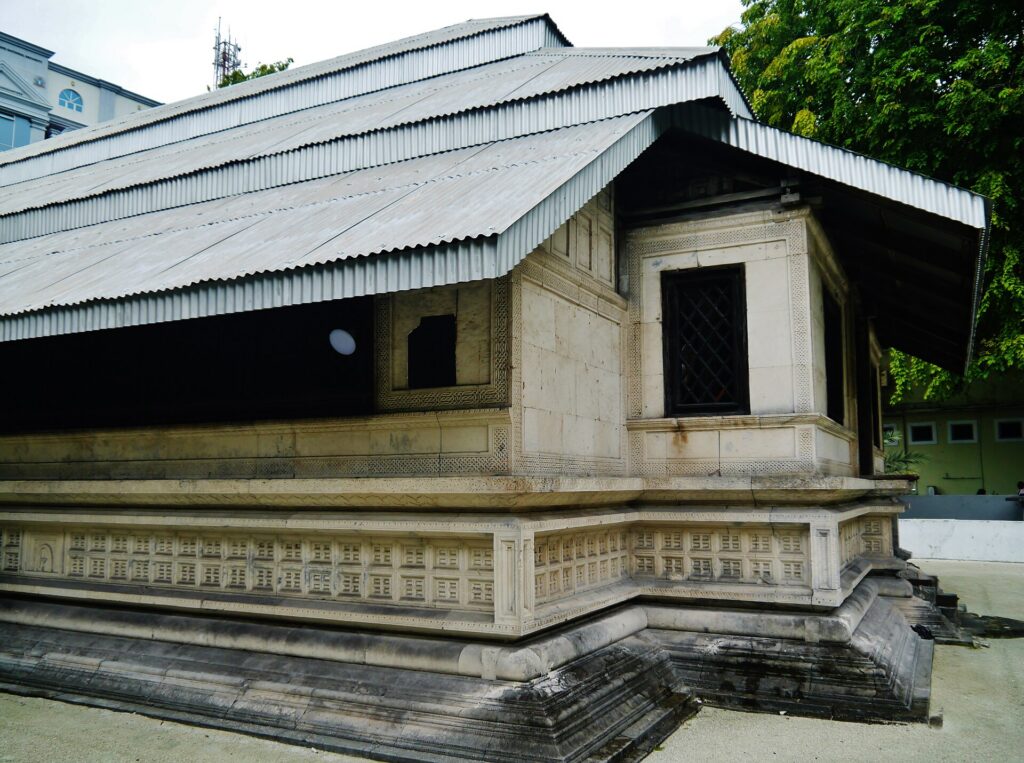
The capital island packs government buildings, the 17th-century coral-stone Old Friday Mosque, the National Museum in Sultan Park, and busy fish and produce markets into a compact, walkable grid. It is also the hub for public ferries to local islands. Visit for a few hours or a night; our Malé guide covers sights, etiquette and ferry logistics.
Hulhumalé and the airport island
Hulhulé holds Velana International Airport, its domestic terminal and the seaplane terminal. Neighbouring Hulhumalé, linked by causeway, is a planned residential island with a long public beach, cafés and many transit hotels and guesthouses. It is the usual base for a night before a morning seaplane. See the Hulhumalé & Airport guide.
Villimalé
Villimalé, about two kilometres west of Malé and linked by a frequent local ferry, is the city’s fifth ward. Once one of the country’s first resorts, it is now a quieter residential island with more greenery and a public beach, and a calmer alternative for a night between ferries. It is covered within the Malé guide.
Industrial and reclaimed islands
Greater Malé also includes working islands that are not visitor destinations, such as Thilafushi, an artificial island used for industry and waste management, and Gulhifalhu, an area of reclamation and development. You may see them from ferries and speedboats, but there is no reason to visit, and tourist accommodation is not the point of these islands.
Malé, Hulhumalé and Villimalé are Muslim communities. Cover shoulders and knees in public, swim in modest clothing at public beaches, and remember alcohol is only available on resort islands. Expect closures around prayer times and a quiet Friday midday. During Ramadan, avoid eating, drinking or smoking in public in daylight hours.
Arrivals, transit and transfer logic
The single most useful thing to understand about Greater Malé is how it fits your transfer. Resorts in the Malé atolls are mostly reached by speedboat straight from the airport jetties. Resorts further afield use seaplanes, which fly only in daylight, or domestic flights from the airport’s domestic terminal. Local islands are reached by shared speedboat or by public ferries from Malé, which do not run on Fridays.
That creates predictable pinch points. An evening landing with a seaplane transfer usually means a night in Hulhumalé or on the airport island. A Friday arrival for a local island reached by public ferry means a speedboat or a wait. A tight connection on your departure day, especially after a seaplane or long speedboat crossing, invites stress; a final night near the airport removes it.
| Situation | What usually works |
|---|---|
| Evening arrival, seaplane resort | Night in Hulhumalé or on the airport island, seaplane next morning |
| Evening arrival, Malé-atoll resort | Speedboat transfer may still run; confirm with the resort |
| Friday arrival, local island | Shared speedboat, or a night in Hulhumalé or Malé and a Saturday ferry |
| Early-morning departure | Final night in Hulhumalé or near the airport |
| Long layover | A few hours in Malé or on Hulhumalé’s beach promenade |
Complete the IMUGA traveller declaration within the 96 hours before you arrive, and check visa and passport rules with Maldives Immigration or your government’s travel advice. Airport check-in locations have changed since the new Terminal 1 opened in July 2025, with seaplane check-in moving there in January 2026 (as checked September 2026): follow your resort’s or airline’s instructions.
Getting there and around
Velana International Airport on Hulhulé is the main international gateway, with flights from the Gulf, South and East Asia and Europe. From the airport, the Sinamalé Bridge, open since 2018, carries road traffic to Malé, and a causeway links the airport to Hulhumalé. Taxis and public buses serve all three islands, and a short public ferry runs between the airport jetty and Malé.
Within Malé, walking and taxis are the easiest ways around; Hulhumalé has wide streets and public buses. Villimalé is reached by local ferry from Malé. Onward public ferries to local islands are run by MTCC under the Raajje Transport Link network, with timetables on its website and app. See getting around the Maldives for a full breakdown.
Best time to visit
The Maldives Meteorological Service describes a drier northeast monsoon from about January to March, a wetter southwest monsoon from about mid-May to November, and transition months in April and December. Temperatures sit around 25–32°C all year. Rain in the southwest monsoon usually comes in showers and squalls rather than all day, but boat crossings can be rougher.
For Greater Malé, season matters less than calendar. Fridays are quiet, with ferries largely off and midday closures. Ramadan shifts city life towards the evening. December to April is peak season for international arrivals, so transit accommodation near the airport fills quickly, particularly around Thursday and Friday ferry gaps and major holiday periods.
Destination guides in Greater Malé
- Malé: sights, etiquette and ferry links (including Villimalé)
- Hulhumalé & Airport: transit stays, seaplane logic and Hulhumalé beach
Nearby regions
Read next
- Where to stay in Greater Malé
- Getting around the Maldives
- Maldives travel planning
- 7-day Malé and South Malé itinerary
- Things to do in the Maldives
Official sources for Greater Malé
Transfer schedules, fees, entry rules and island regulations change; check the official source before you travel. For Greater Malé the most important are the airport operator, the immigration service and the public ferry network, all listed below alongside weather and safety advice.
- Maldives Airports Company Limited (Velana International Airport)
- Maldives Immigration: IMUGA traveller declaration
- Maldives Immigration
- GOV.UK foreign travel advice: Maldives entry requirements
- GOV.UK foreign travel advice: Maldives safety and security
- Raajje Transport Link (MTCC): ferry routes and schedules
- Maldives Meteorological Service: climate of the Maldives
- Ministry of Tourism, Maldives
- Visit Maldives (official tourism promotion)
- The Standard: seaplane check-in moves to VIA Terminal 1
- Wikipedia: Velana International Airport
- Wikipedia: Malé (city, wards and census)
- Wikipedia: Hulhumalé
- The Standard: coral stone mosques nominated for UNESCO World Heritage
Plan a Greater Malé trip
Use Greater Malé to smooth your arrival and departure, add a few hours in the capital, and move on to the atolls.
Where to stay, and what to book
Greater Malé’s accommodation is city and transit focused: hotels and guesthouses in Malé, a large cluster of transit stays in Hulhumalé and accommodation on the airport island. Browse places to stay in Greater Malé and read where to stay in Greater Malé to choose between the islands. For city walks and day trips, see Maldives tours.
A few places to stay in Greater Malé
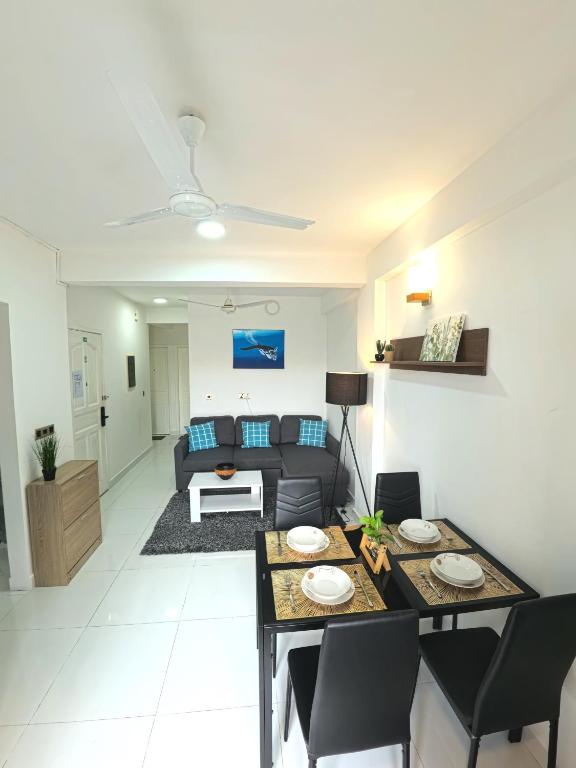 Urban Stays by EmpressHulhumaléView accommodation →
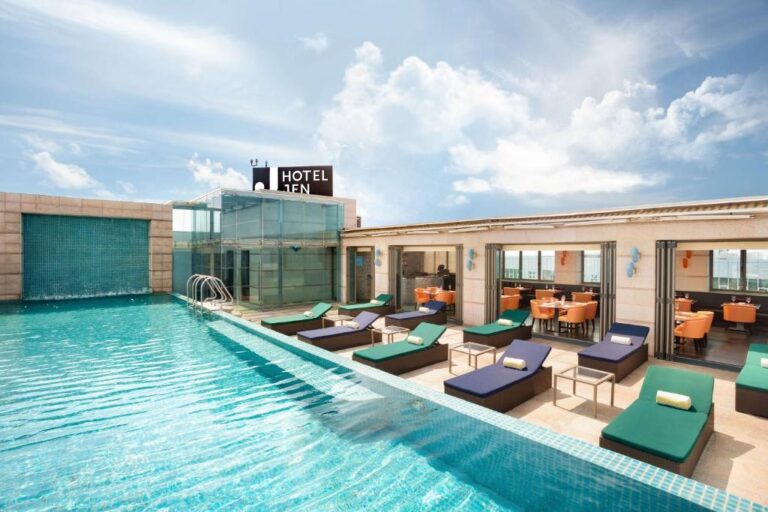 Jen Maldives Male by Shangri-LaMaléView accommodation →
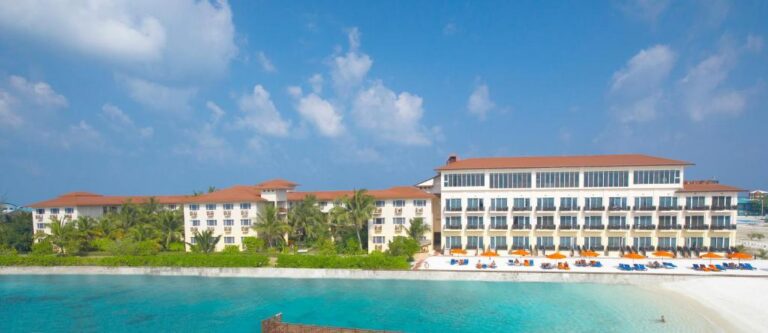 Hulhule Island HotelHulhumaléView accommodation →
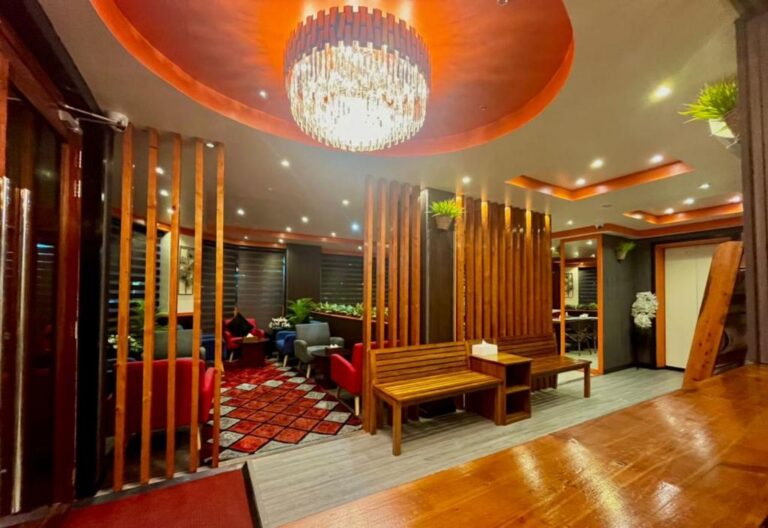 The BeehiveMaléView accommodation →
This opens a live search for every place to stay in Greater Malé on an independent booking site. It is a destination search, not the availability of one property.
Affiliate disclosure: availability searches open on independent booking sites through Stay22. Maldives Travel Guide may earn a commission on a qualifying booking, at no extra cost to you.