

Fuvahmulah
A one-island atoll in open ocean, with tiger shark dives, freshwater lakes and local-island life far from the resort circuit.
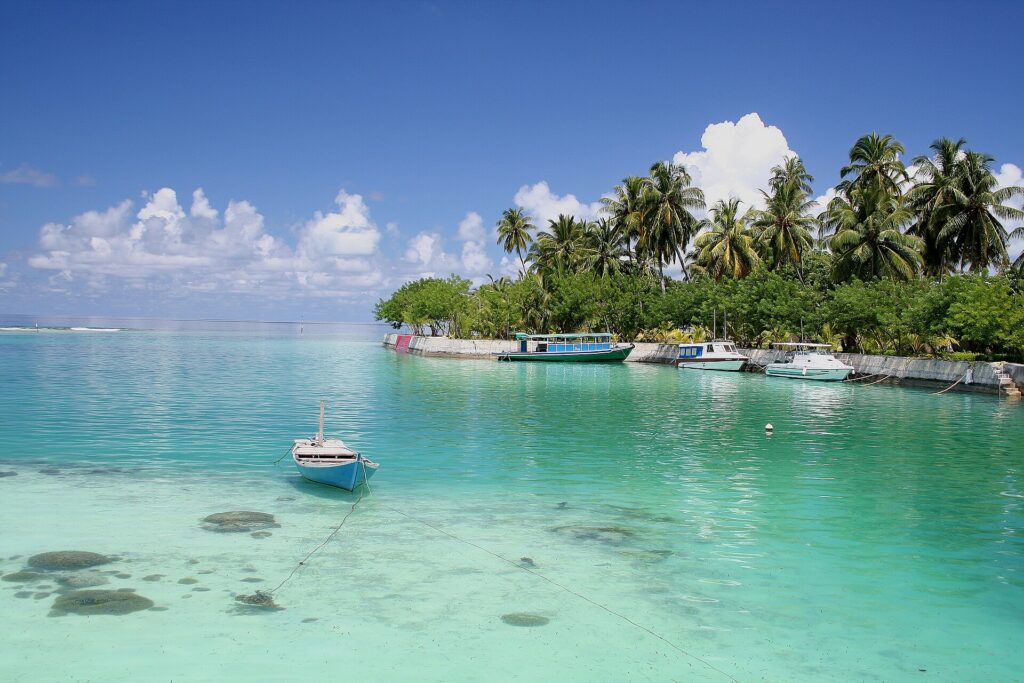
Photo: Asaymirus, CC BY 4.0, via Wikimedia Commons
Fuvahmulah is an atoll of one island. It sits alone in the Equatorial Channel between Huvadhu and Addu, without the ring of reefs, lagoon and sandbanks that define most of the Maldives. The reef drops quickly into deep ocean, and that is why divers come here: tiger sharks are the headline, with thresher sharks and other ocean visitors on the dive-site list as well.
Above water it is just as unusual. The island is green, farmed and lived-in, with two freshwater lakes, marshes, taro fields and a pebble beach rather than soft white sand. It is a city in its own right, with guesthouses but no resort islands, so a stay here means local-island rules, bicycles or taxis, and a rhythm set by the community rather than a resort schedule.
Fuvahmulah at a glance
- Region
- Southern Atolls (Gnaviyani)
- From Malé
- Domestic flight from Velana; MTCC ferry from Addu City
- Island type
- Single-island atoll; local island and city with guesthouses
- Suggested stay
- 4–6 nights for divers; 2–3 nights for a land-based look
- Best time
- Year-round for shark diving; drier January–March
- Known for
- Tiger shark dives, freshwater lakes, Thoondu pebble beach
- Getting around
- Bicycle, taxi, guesthouse transfers
In this Fuvahmulah guide
Why visit Fuvahmulah
Most Maldives trips are built around a lagoon. Fuvahmulah is built around open water. With no surrounding atoll reef, the drop-off lies a short boat ride from the harbour, so dive days involve little transit and a real chance of large pelagic animals. UNESCO, which designated the island a biosphere reserve in 2020, notes tiger and thresher sharks among its marine life, alongside more than 1,200 fish species.
The second reason is the island itself. At roughly 4.5 km long, it is large by Maldivian standards and noticeably different in texture: wetlands, mangroves, farmland and dense vegetation rather than a strip of palms and sand. If you want to see how Maldivians live away from Malé and away from resorts, Fuvahmulah gives you that alongside some of the most talked-about diving in the Indian Ocean.
Shark diving at Fuvahmulah
The tiger shark dive
The dive most visitors come for takes place at the harbour entrance, known to divers as Tiger Harbour, in shallow water. Tiger sharks were originally drawn to the area by waste from the local fish market, and a review of Fuvahmulah shark diving published through the UK Government’s Ocean Country Partnership Programme reports that dive operators now use tuna heads as bait there. Encounters are close, and the experience is intense rather than casual.
The same review is candid about the trade-offs. It notes that shark feeding is not permitted under the Maldives Recreational Diving Regulation, that the site sits in the boat channel at the harbour mouth, and that most operators interviewed wanted practices standardised. Freediving with the sharks raised further concerns. None of this means you should stay away, but it does mean you should choose your operator with care.
Ask any dive centre how it runs the harbour dive before you book: the guide-to-diver ratio, briefing, where divers kneel or hover, how bait is handled and what happens if a shark behaves unpredictably. Hold the certification and recent experience the operator asks for, follow the guide’s instructions without exception, and never touch or chase sharks. UK travel advice asks divers to understand how their operator would reach one of the country’s few hyperbaric chambers.
Other sharks and ocean visitors
Beyond the harbour, dives run along steep outer walls exposed to open-ocean currents. Visit Maldives lists seven shark species at Fuvahmulah’s sites, including thresher sharks. In 2020 the government declared Farikede, a site valued as shark habitat, a protected area. Dive centres also report hammerheads, oceanic mantas and whale sharks at times, but sightings vary with season and conditions, so treat any promise of a particular animal with caution.
These are not beginner conditions. Currents can be strong, entries are often from boats into blue water, and the swell on the exposed coast can make surface intervals uncomfortable. Newer divers can still dive here, but should say so honestly when booking and expect operators to adjust site choice or recommend further training first.
Lakes, beaches and heritage
Bandaara Kilhi and Dhadimagi Kilhi
Fuvahmulah is shaped like a shallow bowl, and its two low points hold freshwater bodies that are rare in the Maldives: Bandaara Kilhi in the south and Dhadimagi Kilhi in the north. UNESCO describes them as surrounded by marsh and thick layers of peat and mud. Visit Maldives mentions canoeing and pedal boating at the island’s nature park, and birdlife is part of the appeal, with more than 167 bird species recorded.
Thoondu beach
At the northern tip, Thoondu is a protected beach made not of fine sand but of small, smooth, shiny pebbles. Visit Maldives describes it as the country’s only beach break for surfing, with June to August the main season. The shoreline faces open ocean, so treat swimming here with respect: currents can be strong, and there is no lagoon to soften the waves.
History on the island
Guided island tours usually include the Havitta, the remains of an ancient Buddhist stupa, and old mosques and communal wells that predate piped water. Visit Maldives also highlights local food, with taro, mangoes and bananas grown on the island. Ask your guesthouse to arrange a local guide, who can explain the sites and the etiquette for visiting mosques.
Island life and etiquette
Fuvahmulah is a Muslim community of more than 10,000 people, and the rules of local islands apply. Alcohol is not available and must not be brought in. Outside any area your guesthouse confirms is designated for swimwear, cover shoulders and upper legs, and swim in modest clothing. Shops and cafés may close briefly at prayer times, and Friday is the weekly holiday, so plan errands and transfers accordingly.
Dress modestly in the streets, at mosques and in the harbour area; ask before photographing people; and keep noise down near homes at night. During Ramadan, avoid eating, drinking or smoking in public during daylight. Topless sunbathing and nudity are illegal everywhere in the Maldives.
Getting there and around
The airport, on the south-eastern side of the island, opened in November 2011. According to Visit Maldives, daily direct flights link Velana International Airport and Fuvahmulah, with a flight time of about 1 hour 30 minutes (as checked September 2026). Maldivian, the state airline, serves the route. Schedules change, so book domestic flights with enough margin for your international connection.
You can also combine Fuvahmulah with Addu City. Visit Maldives says MTCC’s Southern Transport Link runs regular ferries between Fuvahmulah and Feydhoo in Addu, taking roughly 45 to 90 minutes depending on the weather (as checked September 2026). The crossing is open ocean and can be rough. On the island, bicycles are practical and most guesthouses can arrange one; taxis and guesthouse transfers cover longer trips.
Best time to visit
Shark diving runs through the year, so there is no single right month. The Maldives Meteorological Service describes January to March as the dry season and mid-May to November as the wet south-west monsoon, and notes that the southern atolls receive more rain than the north. Rougher seas in the wet season can affect boat dives and the ferry from Addu.
Surfers should look at June to August for Thoondu. Divers interested in particular seasonal visitors, such as oceanic mantas or whale sharks, should ask dive centres directly about recent patterns rather than relying on generic calendars, because sightings vary from year to year.
How long to stay
For a diving trip, four to six nights gives you enough dives to allow for weather days and a balance between the harbour dive and the outer walls. If you are not diving, two or three nights is enough to cycle the island, visit the lakes and Thoondu, and take a guided heritage tour. Many travellers pair Fuvahmulah with Addu City, linked by flight or ferry.
Find accommodation in Fuvahmulah
Book your guesthouse and dive days together, and leave a buffer night before your flight back to Malé in case weather affects boats.
Browse places to stay in Fuvahmulah
Listings link to independent booking providers. See our affiliate disclosure.
Nearby destinations
Frequently asked questions
Do I need to be an experienced diver to see tiger sharks at Fuvahmulah?
The harbour dive is shallow, but it involves large sharks, surge and boat traffic, and the outer sites have strong currents. Operators set their own entry requirements, often including certification level and logged dives. Tell the dive centre your experience honestly and follow its advice; if in doubt, dive with them on easier sites first.
Is the tiger shark dive ethical?
It is a baited dive, which is controversial. A government-funded review found operators use tuna heads as bait, notes that feeding is not permitted under the national diving regulation, and recommends a shared code of conduct. Ask operators how they manage bait and group size, and decide whether you are comfortable before booking.
Can I drink alcohol on Fuvahmulah?
No. Fuvahmulah is a local island with no resorts, and alcohol is not sold. UK travel advice notes that alcoholic drinks are only available on resort islands and should not be taken off them. Plan any celebration drinks for a resort stay elsewhere in your trip.
Can I travel between Fuvahmulah and Addu by boat?
Yes. MTCC’s Southern Transport Link operates ferries between Fuvahmulah and Feydhoo in Addu City, according to Visit Maldives. The crossing depends on weather, so check the current timetable on the MTCC booking site and keep your plans flexible, especially on days with onward flights.
Plan the rest of your trip
- Southern Atolls region guide
- Where to stay in the Southern Atolls
- Getting around the Maldives
- Maldives diving trips
- Maldives travel planning
- Maldives itineraries
Official sources for Fuvahmulah
Transfer schedules, fees, entry rules and island regulations change; check the official source before you travel. The sources below were used for this guide, and the MTCC site is where ferry timetables are published.
- Visit Maldives: Fuvahmulah
- Visit Maldives: Fuvahmulah connectivity
- Visit Maldives: Fuvahmulah activities
- Visit Maldives: Fuvahmulah nature and culture
- UNESCO: Fuvahmulah Biosphere Reserve
- Maldivian: Fuvahmulah
- MTCC Southern Transport Link
- Maldives Meteorological Service: climate
- GOV.UK: Maldives safety and security
- JNCC / OCPP: Fuvahmulah shark diving review
Plan a Southern Atolls trip
Combine Fuvahmulah with Addu City or Huvadhu, and check flight and ferry links before you fix dates.
Where to stay, and what to book
Accommodation on Fuvahmulah is guesthouse-based, and many guesthouses work closely with dive centres. Compare locations, bicycle and transfer arrangements, and whether dive packages are included in our Fuvahmulah accommodation listings, then look at Maldives tours and activities for excursions elsewhere in your trip.
A few places to stay in Fuvahmulah
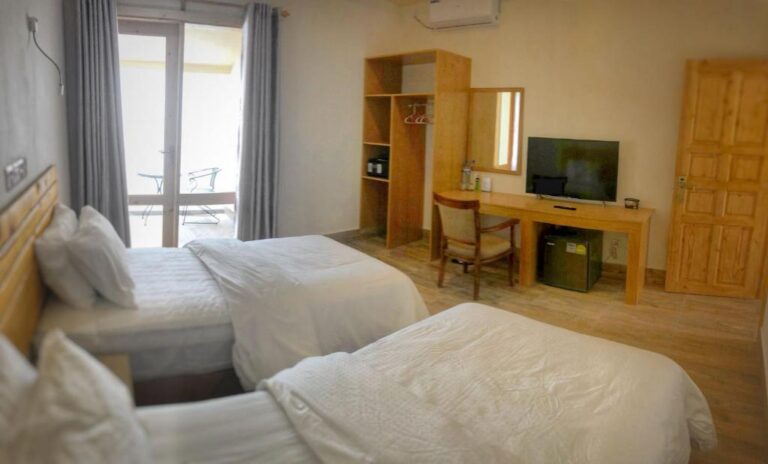 Tiger Shark Residence & DiveFuvahmulahView accommodation →Endhaa, Divers HomeFuvahmulahView accommodation →
 Isle Royal InnFuvahmulahView accommodation →
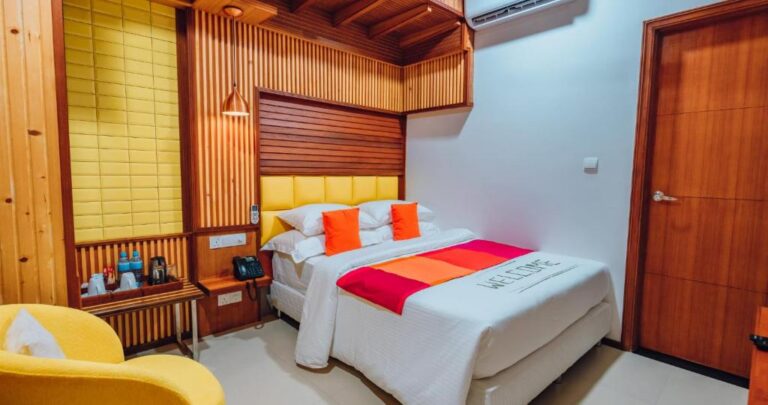 Millennium Island ResidenceFuvahmulahView accommodation →
This opens a live search for every place to stay in Fuvahmulah on an independent booking site. It is a destination search, not the availability of one property.
Affiliate disclosure: availability searches open on independent booking sites through Stay22. Maldives Travel Guide may earn a commission on a qualifying booking, at no extra cost to you.