
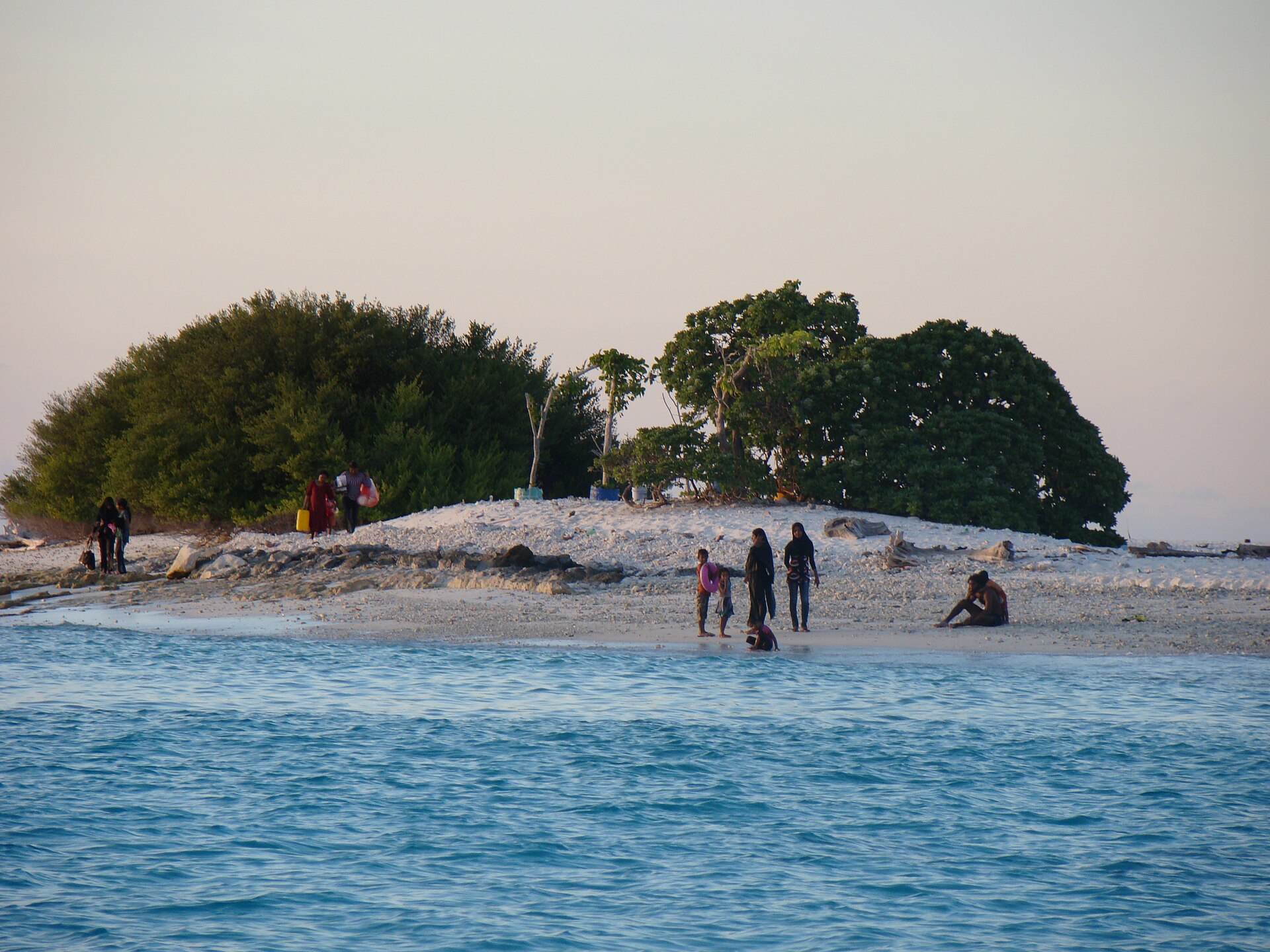
Ari Atoll
Year-round whale sharks, seasonal mantas and a mix of guesthouse and resort islands across North and South Ari.
Photo: Ukulhas, CC BY-SA 3.0, via Wikimedia Commons
Ari Atoll lies west of the Malé atolls and is one of the largest atolls in the Maldives. It is split into two administrative atolls, created in 1984: Alifu Alifu (North Ari), which also takes in the small Rasdhoo Atoll and the lone island of Thoddoo, and Alifu Dhaalu (South Ari). Rasdhoo and Mahibadhoo are their capitals.
For travellers, Ari combines some of the country’s most established guesthouse islands with a large resort area and remarkable marine life. The South Ari Marine Protected Area is one of very few places in the world where whale sharks can be encountered year-round, and the atoll’s mantas follow a seasonal pattern that makes them accessible in most months.
Ari Atoll at a glance
- Atolls covered
- Alifu Alifu (North Ari, Rasdhoo Atoll, Thoddoo) and Alifu Dhaalu (South Ari)
- Main destinations
- Ukulhas, Rasdhoo, Thoddoo, Mathiveri, Dhigurah, Dhangethi, Omadhoo, Maamigili and the resort islands
- From Malé
- Speedboat, MTCC public ferry, seaplane, or domestic flight to Maamigili
- Suggested stay
- 7–10 days for two or three islands
- Best time
- December to April for calmer, drier weather; whale sharks year-round
- Known for
- Year-round whale sharks, seasonal mantas, guesthouse islands, resort islands
In this Ari Atoll guide
Why visit Ari Atoll
Ari is where many travellers first see the Maldives’ big marine life. Whale shark trips run along South Ari’s protected outer reef, manta cleaning stations operate on one side of the atoll or the other depending on the monsoon, and channels and thilas attract reef sharks, turtles and schooling fish. Rasdhoo’s outer reef adds deep dives on which hammerheads are sometimes seen.
It is also one of the easiest atolls to explore on a moderate budget. Ari’s guesthouse islands are reached by speedboat or ferry from Malé, and the Ministry of Tourism recorded 269 guesthouses across the two administrative atolls at the end of 2024 (as checked September 2026). Alongside them are 29 resorts, giving a real choice between village life and a private-island stay, or a mix of both.
The trade-offs are honest ones. Ari is further from the airport than the Malé atolls, so transfers take longer and cost more, and the southwest monsoon can disrupt boat trips. Local islands are conservative Muslim communities where alcohol is not available, and each island has a different character, so choosing well matters.

Main islands and places
Ukulhas
A compact, tidy North Ari local island that opened to guesthouse tourism in 2012 and is known for its early, systematic waste management. It has a clearly marked tourist beach, snorkelling off the island and boat trips to western-side manta sites in the northeast monsoon. A reliable choice for a first local-island stay.
Rasdhoo
The capital of Alifu Alifu and the only inhabited island of little Rasdhoo Atoll, just off Ari’s north-eastern edge. It is small and lived-in, with limited beach, but it is a hub for channel and reef diving and early-morning outer-reef dives where scalloped hammerheads are sometimes seen by experienced divers.
Thoddoo
A single island on its own reef north of Rasdhoo, and the country’s leading grower of watermelon and betel leaf. Its farms give it a green, spacious feel unusual in the Maldives, and it has a designated tourist beach and snorkelling close to shore. Crossings can be rough in the southwest monsoon.
Mathiveri
A small, quiet island on North Ari’s western side with around ten guesthouses reported. Visit Maldives highlights its old mosque, dated by a bronze plate to 1733, a giant banyan tree and the Mathiveri Finolhu sandbank. Good for travellers who want calm and do not need many cafés.
Dhigurah
A long, narrow South Ari island at the edge of the South Ari Marine Protected Area, closely associated with whale shark trips and research. It has a designated tourist beach, sandbank trips and more space than most local islands. Plan several nights to allow for more than one whale shark attempt.
Dhangethi
A compact South Ari village island where fishing, handicrafts and boat building sit alongside tourism. It is a quieter base for reef, manta and whale shark trips, with a longer run to the protected reef than from Dhigurah or Maamigili. Suits travellers who value calm evenings over choice.
Omadhoo
A small South Ari island of a little over 900 residents, with a handful of guesthouses that offer whale shark, manta, snorkelling, fishing and sandbank trips. Facilities are simple and evenings quiet. Your guesthouse will shape much of the stay, so ask in advance which excursions run.
Maamigili
South Ari’s largest and most populous island, with Villa International Airport Maamigili on its southern edge and frontage on the whale shark reef. It is a busy island town rather than a beach retreat, but a practical gateway to South Ari by domestic flight and a short hop to the MPA.
North Ari Resort Islands
Resort islands across North Ari and Rasdhoo Atoll, each operated as a single resort with its own transfers, meal plans and dive centre. Our guide explains how the model works, what to compare, and the manta and reef diving nearby, without naming or ranking individual resorts.
South Ari Resort Islands
Resort islands across South Ari, including several near the South Ari MPA’s whale shark reef. Transfers are by seaplane or by domestic flight to Maamigili and speedboat. Our guide covers the resort model, what to compare between resorts and the rules for whale shark encounters.
Ari’s local islands are Muslim communities. Wear swimwear only on designated tourist beaches and on boat trips, and cover shoulders and knees in villages, harbours and shops. Alcohol is not sold on local islands and must not be brought onto them. Shops and cafés may close briefly for prayers, and Friday, the main day of prayer, is quieter with limited public transport. Ask before photographing people.
Whale sharks and mantas
The South Ari Marine Protected Area
The South Ari MPA was declared in 2009 and runs for about 42 kilometres along the outer reef of South Ari’s southern edge, westwards from the north-eastern tip of Dhigurah. Visit Maldives describes it as one of the only year-round whale shark aggregation sites of its kind, and lists Maamigili, Dhigurah, Dhidhdhoo and Fenfushi as the local islands facing it.
Research shared by the Maldives Whale Shark Research Programme through Visit Maldives indicates that most of the sharks are juvenile males, and that the area has one of the highest re-sighting rates of individual sharks in the world. Visit Maldives reports the highest numbers between August and November. Boat strikes are a recognised threat, which is why the MPA’s rules focus on vessel behaviour.
Mantas follow the monsoon
According to the Manta Trust, Ari’s mantas use feeding and cleaning sites on the down-current edge of the atoll: on the western side during the northeast monsoon, roughly December to March or April, and on the eastern side during the southwest monsoon, roughly May to November. That means there is usually somewhere in Ari to look for mantas, but the right island base changes with the season.
Whale shark code of conduct: do not touch, keep at least 3 metres from the body and 4 metres from the tail, do not swim in front of the shark and enter the water quietly. Under the 2025 amendment to the MPA management plan, boats must fly a flag in the contact zone, share their live location, approach by a designated route and limit the zone to six vessels at once, and the Environmental Protection Agency requires diving and snorkelling vessels in the MPA to register (as checked September 2026). Sightings are never guaranteed.
Getting there and around
Visit Maldives lists four ways into Ari (as checked September 2026): shared and private speedboats from the airport and Malé; MTCC public ferries from Malé to Ari’s islands on varying days and times; Villa Air domestic flights from Velana International Airport to Villa International Airport Maamigili; and Trans Maldivian Airways seaplanes to North and South Ari resorts. Guesthouses usually arrange speedboat transfers; resorts arrange their own.
Moving between islands within Ari is possible by public ferry, scheduled speedboat or private charter, but routes do not always run daily, and switching between North and South Ari can take planning. Friday services are limited on many routes. Build in a buffer night before your international flight, and see our getting around the Maldives guide for how the transfer types compare.
GOV.UK advises paying attention to safety briefings and making sure life jackets are provided on boat trips, particularly on smaller excursion boats. It also warns about strong currents: swim only where it is designated safe for tourists.
Best time to visit
The northeast monsoon, roughly December to April, generally brings the driest, sunniest weather and calmer seas, and is the busiest period for guesthouses and resorts. The southwest monsoon, roughly May to October or November, is wetter and windier, with rougher crossings, but rates are often lower and whale shark numbers are usually highest from August to November.
| Period | Weather (general pattern) | Marine life notes |
|---|---|---|
| December to April | Drier, sunnier, calmer seas | Mantas mainly on Ari’s western side; whale sharks present |
| May to November | Wetter and windier, rougher crossings | Mantas mainly on the eastern side; whale shark numbers usually peak August to November |
These are general patterns, not guarantees; weather varies year to year and within each season. Check the Maldives Meteorological Service forecast in the days before you travel, and keep a spare day in your plan for cancelled boat trips.
Destination guides in Ari Atoll
- Ukulhas
- Rasdhoo
- Thoddoo
- Mathiveri
- Dhigurah
- Dhangethi
- Omadhoo
- Maamigili
- North Ari Resort Islands
- South Ari Resort Islands
Nearby regions
Read next
- Where to stay in Ari Atoll
- 10-day Ari Atoll local islands itinerary
- Maldives snorkelling tours
- Maldives diving trips
- Sandbank and island-hopping tours
- Getting around the Maldives
- Maldives travel planning
- All Maldives destinations
Official sources for Ari Atoll
Transfer schedules, fees, entry rules and island regulations change; check the official source before you travel. Visit Maldives, the Ministry of Tourism, Maldives Immigration and the Maldives Meteorological Service are the primary sources below; the Manta Trust is the research charity behind the manta season data.
- Visit Maldives Atolls: Ari Atoll
- Visit Maldives Atolls: Ari Atoll connectivity
- Visit Maldives Atolls: Ari Atoll nature and culture
- Visit Maldives Atolls: Ari Atoll activities
- Visit Maldives: Q&A with the Maldives Whale Shark Research Programme
- Visit Maldives: swimming with mantas
- Visit Maldives: travel information
- Maldives Immigration: tourist visa
- Maldives Immigration: IMUGA traveller declaration
- Ministry of Tourism: Tourism Yearbook 2025
- Maldives Meteorological Service
- MTCC customer portal (RTL public ferry services)
- GOV.UK: Maldives travel advice, safety and security
- Manta Trust: Maldivian Manta Ray Project annual report, Ari Atoll 2018
Plan a Ari Atoll trip
Mix a North Ari guesthouse island with South Ari’s whale shark coast, or add a few resort nights. Start with our where-to-stay guide or the 10-day local islands itinerary.
Where to stay, and what to book
Ari has accommodation for most styles of trip, from small family-run guesthouses on Ukulhas, Thoddoo and Dhigurah to resort islands in North and South Ari. Browse places to stay in Ari Atoll, read our where to stay in Ari Atoll guide to match islands to your priorities, and see Maldives tours and excursions for whale shark, manta and sandbank trips.
A few places to stay in Ari Atoll
 Beach Villa UkulhasUkulhasView accommodation →
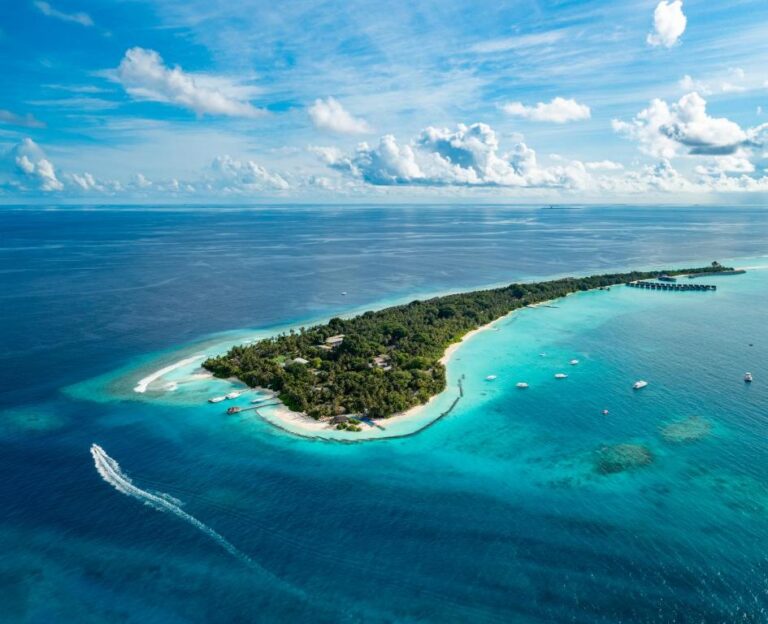 Niva Kuramathi MaldivesKuramathiView accommodation →
 Machchafushi Island Resort & Spa Maldives, The Centara CollectionMachchafushiView accommodation →
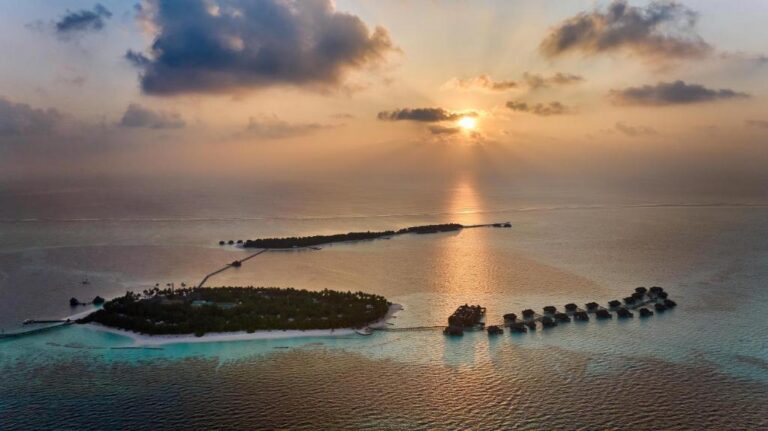 Conrad Maldives Rangali IslandView accommodation →
This opens a live search for every place to stay in Ari Atoll on an independent booking site. It is a destination search, not the availability of one property.
Affiliate disclosure: availability searches open on independent booking sites through Stay22. Maldives Travel Guide may earn a commission on a qualifying booking, at no extra cost to you.