

Hulhumalé & Airport
How Velana airport, the seaplane terminal and neighbouring Hulhumalé fit together for first nights, late arrivals and onward transfers.
Photo: StromBer, CC BY-SA 3.0, via Wikimedia Commons
Almost every trip to the Maldives begins and ends on two neighbouring islands north-east of Malé. Hulhulé is the airport island, home to Velana International Airport, its domestic terminal and the seaplane base. Hulhumalé, joined to it by road, is a reclaimed island of apartment blocks, parks and a long public beach, and the usual place to sleep between a late flight and an onward transfer.
This guide explains how the two islands work together for travellers: which terminal handles which transfer, why seaplane timings often force an overnight stop, what a transit night in Hulhumalé involves, and what to expect from the island itself if you have a few spare hours. It is written for planning connections, not as a resort-style destination guide.
Hulhumalé & Airport at a glance
- Region
- Greater Malé
- From Malé
- Road link over the Sinamalé Bridge; public ferry from Malé to the airport jetty
- Island type
- Airport island (Hulhulé) and reclaimed residential island (Hulhumalé)
- Suggested stay
- One night, or a few hours between flights
- Best time
- Year-round; seaplane transfers depend on daylight and weather
- Known for
- Velana airport, seaplane terminal, transit stays, Hulhumalé beach
- Getting around
- Taxis and public buses; short road journeys between the islands
In this Hulhumalé & Airport guide
Why stay in Hulhumalé
The honest reason most people stay here is timing. International flights often land in the evening or leave early in the morning, while seaplanes fly only in daylight and public ferries to local islands run on fixed timetables. A night in Hulhumalé, a short drive from the terminal, turns a stressful late connection into an easy morning transfer, and it is often simpler than crossing into Malé.
Hulhumalé also works for a short first taste of the country. It is newer, greener and less congested than Malé, with wide streets, cafés and a public beach on its eastern shore. It is still a local, residential island with local rules: no alcohol, modest dress in public and on the beach, and a quiet Friday midday. Treat it as a practical base rather than a holiday destination in its own right.
How the airport island works
Velana International Airport occupies almost all of Hulhulé. It has an international terminal, a domestic terminal and a separate seaplane terminal, which Maldives Airports Company describes as the world’s largest seaplane hub. A new international passenger terminal, known as Terminal 1, opened in July 2025, and seaplane check-in moved into Terminal 1 in January 2026 (as checked September 2026). Airport layouts and check-in points are still changing, so follow the signage and your resort’s instructions on the day.
Meeting your transfer
Resorts and many guesthouses meet guests in the arrivals area and escort them to the relevant jetty, domestic check-in or seaplane lounge. If you have booked a transfer through your accommodation, have its confirmation, your arrival flight number and a contact phone number to hand. Independent travellers heading for public ferries or taxis should leave through the main arrivals exit towards the jetty and road.
The Maldives requires every arriving traveller to complete the IMUGA traveller declaration within 96 hours before arrival, and most nationalities receive a 30-day visa on arrival. Confirm current rules with Maldives Immigration or your government’s travel advice before you fly, and carry proof of your accommodation and onward travel.
Seaplanes, speedboats and domestic flights
How you leave the airport depends on where you are going. Resorts in the Malé atolls are usually reached by speedboat straight from the airport jetties. More distant atolls are served by seaplane from the Noovilu seaplane terminal, which opened in 2022, or by a domestic flight followed by a boat. Local islands in Kaafu are reached by shared speedboat or by public ferry from Malé.
| Transfer type | Leaves from | Timing logic |
|---|---|---|
| Speedboat to Malé-atoll resorts and local islands | Airport jetties (and Malé) | Often able to run after dark on resort-arranged or scheduled departures |
| Seaplane | Seaplane terminal, check-in at Terminal 1 | Daylight only; late arrivals usually wait until the next morning |
| Domestic flight | Domestic terminal | Scheduled flights, often followed by a speedboat to the island |
| Public ferry | Malé ferry terminals | Fixed timetables; reduced or absent on Fridays |
Because seaplanes do not fly at night, a flight landing in the late afternoon or evening often means a night near the airport before a morning seaplane. Resorts typically advise on this when you share your flight details. Seaplanes and small domestic aircraft also have lower baggage allowances than international flights; ask your resort or airline for the current limit before you pack.
Seaplanes can be delayed or rescheduled in poor weather, and speedboat crossings can be rough during the southwest monsoon. Leave slack in your plans, avoid tight same-day connections on your departure day, and wear the lifejackets provided on boats.
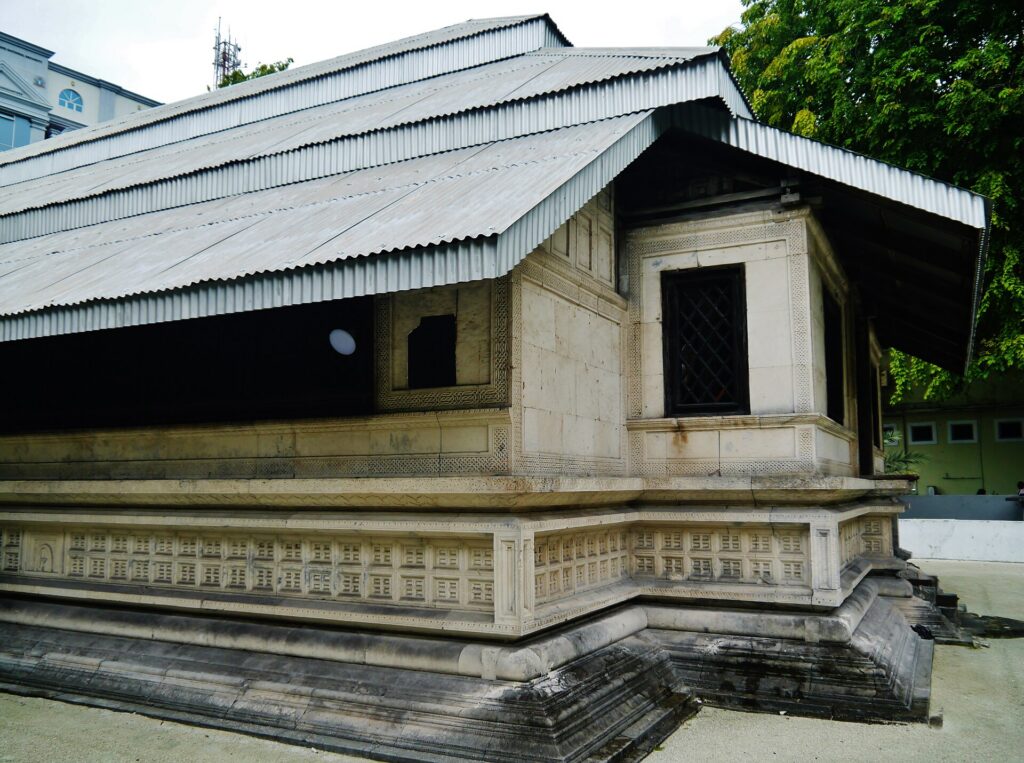
Hulhumalé island and beach
Hulhumalé is a reclaimed island. Reclamation began in 1997, the first phase was completed in 2002 and a second phase began in 2015, creating an island of about four square kilometres. By the 2022 census around 65,700 people lived here. Its grid of residential streets, mosques, parks, shops and cafés feels planned and orderly compared with Malé, and new development is continuing.
The public beach along the eastern shore is the main attraction for visitors, with a promenade, shade trees and cafés behind it. This is a local beach used by Maldivian families, not a designated bikini beach, so swim in modest clothing that covers shoulders and upper legs, as UK government advice recommends for bathing outside resorts. Swim only in calm, sheltered water and watch for currents.
Hulhumalé is a residential Muslim community. Cover up away from the water, do not bring alcohol from the airport or resorts, and keep noise down late at night. During Ramadan, avoid eating or drinking in public during daylight hours.
Getting there and around
Hulhumalé is linked to the airport island by a causeway, and since 2018 the Sinamalé Bridge has connected both to Malé by road. Taxis wait outside arrivals, and many Hulhumalé guesthouses and hotels offer airport pick-ups. Public buses run within Hulhumalé and between Hulhumalé, the airport and Malé; fares, routes and hours change, and services pause around Friday midday prayers.
Between the airport and Malé, the short public ferry from the airport jetty is an alternative to the road. For transfers to local islands, use the Raajje Transport Link timetables for public ferries or book a shared speedboat, and see getting around the Maldives for how seaplanes, domestic flights and ferries fit together.
Best time to visit
The Maldives Meteorological Service describes a drier northeast monsoon from about January to March, a wetter southwest monsoon from mid-May to November, and transition months in April and December. For a transit stay the season matters less than the clock: daylight limits seaplanes, and rough weather in the southwest monsoon can delay speedboats and seaplanes. Check the forecast the day before a transfer.
Busy travel periods, including the December to April high season and holiday weeks in major source markets, fill airport-side accommodation quickly. So do Thursdays and Fridays, when travellers heading for local islands wait for weekday ferries. If your onward plans depend on a particular ferry day, book the night before it early.
How long to stay
One night is enough for nearly everyone. Arrive, eat, sleep and take a morning seaplane, domestic flight or ferry. If you have a long gap between an island stay and an evening departure, a few hours on Hulhumalé’s beach promenade or a short trip into Malé fills the time without risking your flight. Longer stays make most sense for travellers visiting friends or working in Greater Malé.
Find accommodation in Hulhumalé & Airport
Book early if you land after mid-afternoon or on a Thursday or Friday, when seaplane and ferry timings push more travellers into a night near the airport.
Browse places to stay in Hulhumalé & Airport
Listings link to independent booking providers. See our affiliate disclosure.
Nearby destinations
Frequently asked questions
Do I need to stay overnight before a seaplane transfer?
Often, yes, if you land late. Seaplanes fly only in daylight, so an arrival in the late afternoon or evening usually means a night near the airport and a morning flight. Your resort will normally tell you once it has your flight details. Speedboat transfers to resorts in the Malé atolls are less affected and can sometimes run after dark.
Is Hulhumalé or Malé better for a transit night?
For most transit stays Hulhumalé is more convenient: it is closer to the terminal by road, quieter, and has a beach promenade. Malé makes more sense if you want to sightsee or catch an early public ferry from the Malé terminals. Both are local islands with no alcohol and modest dress rules, and both have a range of hotels and guesthouses.
Can I swim at Hulhumalé beach?
Yes, but it is a local public beach, not a designated tourist or bikini beach. Swim in modest clothing that covers shoulders and upper legs, stay in sheltered water, and watch for currents and boat traffic. If you want to swim in a bikini before your flight, you will need a resort day visit or to wait until you reach your island.
How do I get from the airport to Hulhumalé?
By taxi, public bus or a pick-up arranged by your accommodation. The two islands are linked by road, so the journey is short, although traffic at peak times can slow it down. Buses need a card or ticket arrangement that changes over time, so check the current method on arrival.
Plan the rest of your trip
- Greater Malé region guide
- Where to stay in Greater Malé
- Getting around the Maldives
- Maldives travel planning
- All Maldives destinations
Official sources for Hulhumalé & Airport
Transfer schedules, fees, entry rules and island regulations change; check the official source before you travel. Airport terminals in particular have been changing since the new Terminal 1 opened, so the airport operator and your resort or airline are the final word on where to check in.
- Maldives Airports Company Limited (Velana International Airport)
- Maldives Immigration: IMUGA traveller declaration
- GOV.UK foreign travel advice: Maldives entry requirements
- GOV.UK foreign travel advice: Maldives safety and security
- Raajje Transport Link (MTCC): ferry routes and schedules
- Maldives Meteorological Service: climate of the Maldives
- The Standard: seaplane check-in moves to VIA Terminal 1
- Wikipedia: Velana International Airport
- Wikipedia: Hulhumalé
- Raajje.mv: MTCC bus service linking Hulhumalé and Velana International Airport
Plan a Greater Malé trip
Use Hulhumalé to smooth late arrivals and early departures, then head to a local island or resort in the Malé atolls.
Where to stay, and what to book
Hulhumalé has many guesthouses and hotels geared to transit guests, several with airport pick-ups and early breakfasts, and there is accommodation on the airport island itself. Compare places to stay in Hulhumalé and near the airport by transfer arrangements and check-in times. For day activities and excursions around Greater Malé, see Maldives tours.
A few places to stay in Hulhumalé & Airport
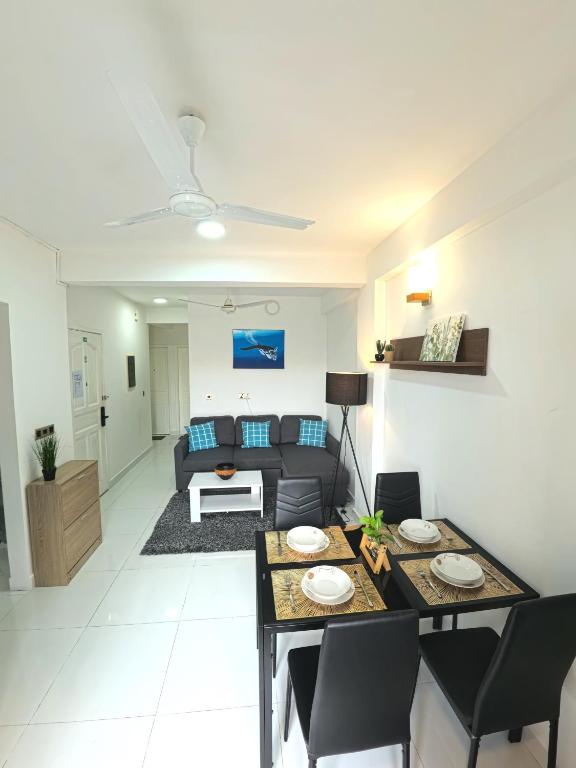 Urban Stays by EmpressHulhumaléView accommodation →
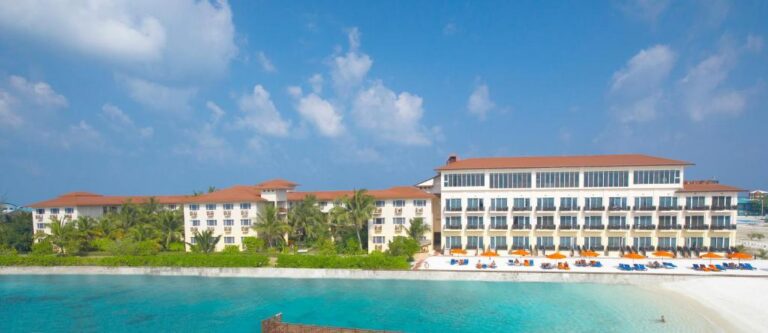 Hulhule Island HotelHulhumaléView accommodation →
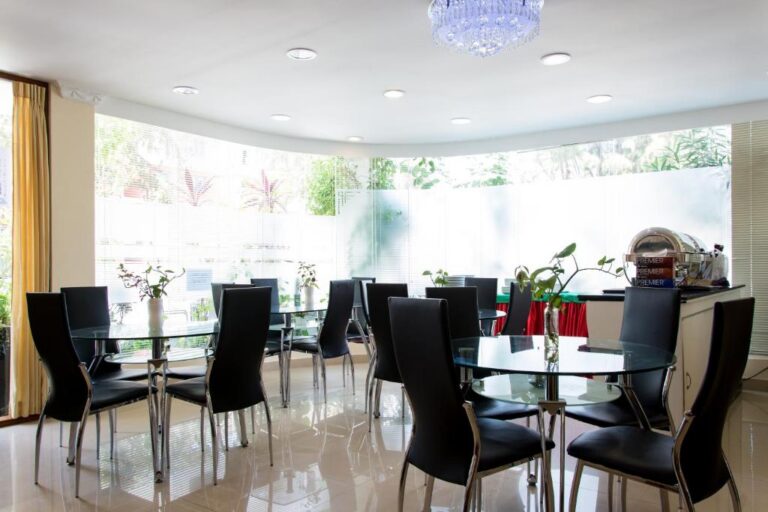 Beach PalaceHulhumaléView accommodation →
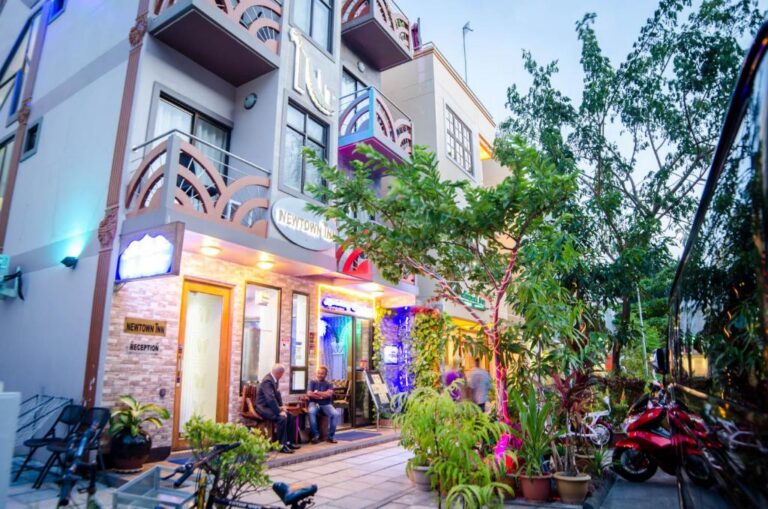 Newtown InnHulhumaléView accommodation →
This opens a live search for every place to stay in Hulhumalé & Airport on an independent booking site. It is a destination search, not the availability of one property.
Affiliate disclosure: availability searches open on independent booking sites through Stay22. Maldives Travel Guide may earn a commission on a qualifying booking, at no extra cost to you.