
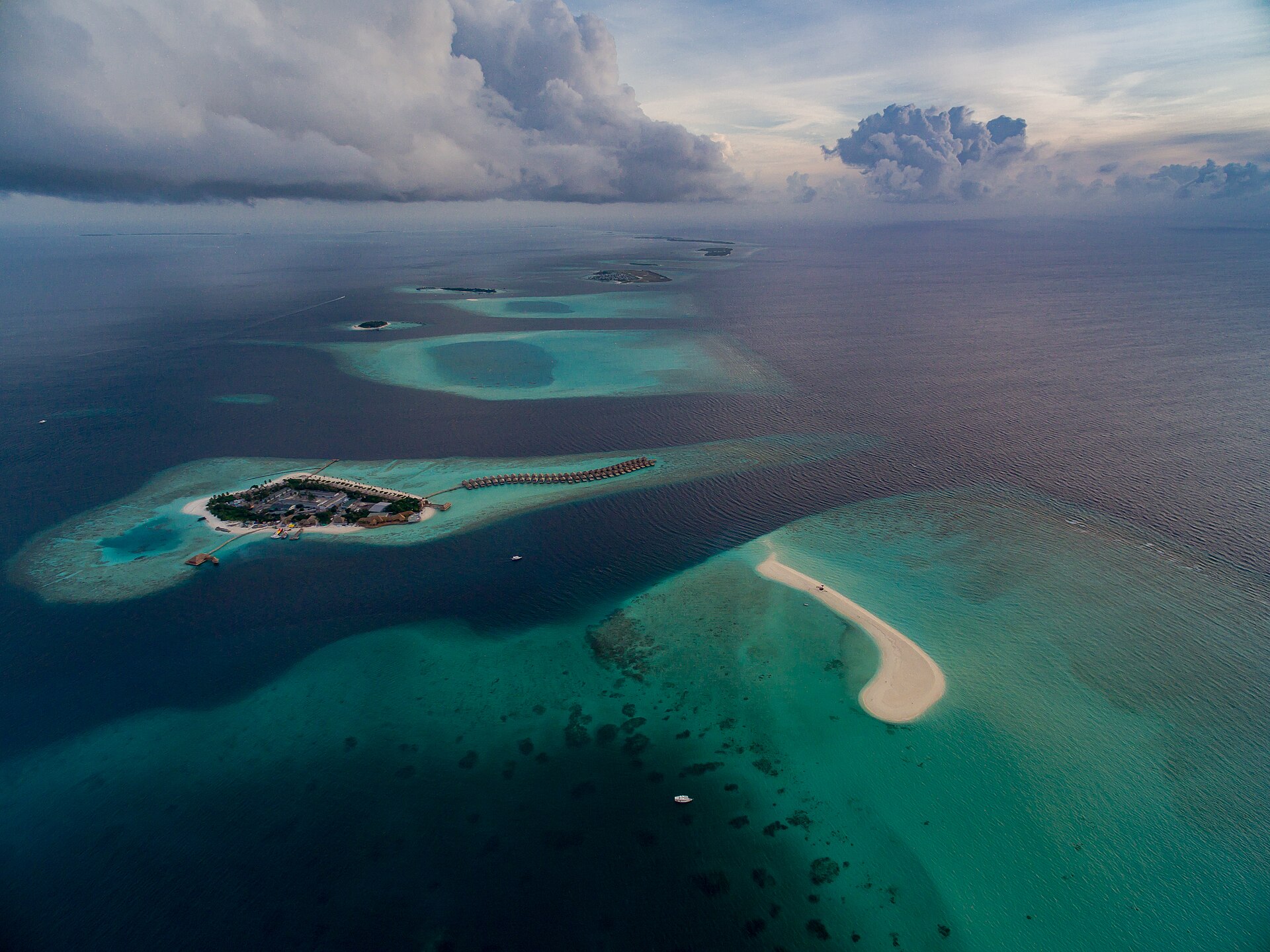
Northern Atolls
From Lhaviyani and Noonu’s resort islands to the heritage islands of the Haa atolls, the north rewards travellers who plan around flights and ferries.
Photo: dronepicr, CC BY 2.0, via Wikimedia Commons
The Northern Atolls stretch from Lhaviyani and Noonu, north-east of Baa and Raa, up to Haa Alifu at the top of the archipelago. This region groups five administrative atolls: Lhaviyani, Noonu, Shaviyani, Haa Dhaalu and Haa Alifu. The Ministry of Tourism’s Tourism Yearbook 2025 counted 27 resorts, one hotel and 70 guesthouses across them at the end of 2024.
The region divides naturally in two. The southern pair, Lhaviyani and Noonu, are resort-led atolls reached by seaplane or domestic flight. The far north is quieter and more local, with heritage islands, the city of Kulhudhuffushi and the international airport on Hanimaadhoo. This hub explains how the region fits together and links to each destination guide.
Northern Atolls at a glance
- Atolls covered
- Lhaviyani, Noonu, Shaviyani, Haa Dhaalu and Haa Alifu
- Main destinations
- Lhaviyani Atoll, Noonu Atoll, Hanimaadhoo, Far North Atolls
- From Malé
- Seaplane to resorts; domestic flights to Madivaru, Maafaru, Hanimaadhoo, Kulhudhuffushi, Hoarafushi and Funadhoo
- Suggested stay
- 5–10 nights
- Best time
- January to March for the driest weather
- Known for
- Resort islands, channel and wreck diving, Utheemu Ganduvaru, northern island life
In this Northern Atolls guide
Why visit the Northern Atolls
The north offers two quite different trips. In Lhaviyani and Noonu you get a resort holiday a little beyond the busier central atolls, with channel dives, wrecks and reefs known for schooling fish; Visit Maldives describes The Shipyard, a pair of coral-covered wrecks, as one of Lhaviyani’s largest dive attractions. Further north, the Haa atolls and Shaviyani offer everyday island life and some of the country’s most important historical sites.
Access has improved sharply in recent years. Maafaru International Airport opened in Noonu in 2019, Madivaru Airport in Lhaviyani in 2022, and Hanimaadhoo’s airport moved into a new terminal in October 2025. Public ferries on MTCC’s Raajje Transport Link now run within both halves of the region. That makes the north practical for travellers who want to combine a resort stay with a local-island trip.
The trade-offs are distance, cost and choice. Resort transfers are longer and priced separately, guesthouse numbers are small outside a few islands, and excursions depend on what your host or resort can arrange. There are no big day-trip hubs of the kind found in the Malé atolls. If you want the widest choice of guesthouses, Ari or the Malé atolls are easier.
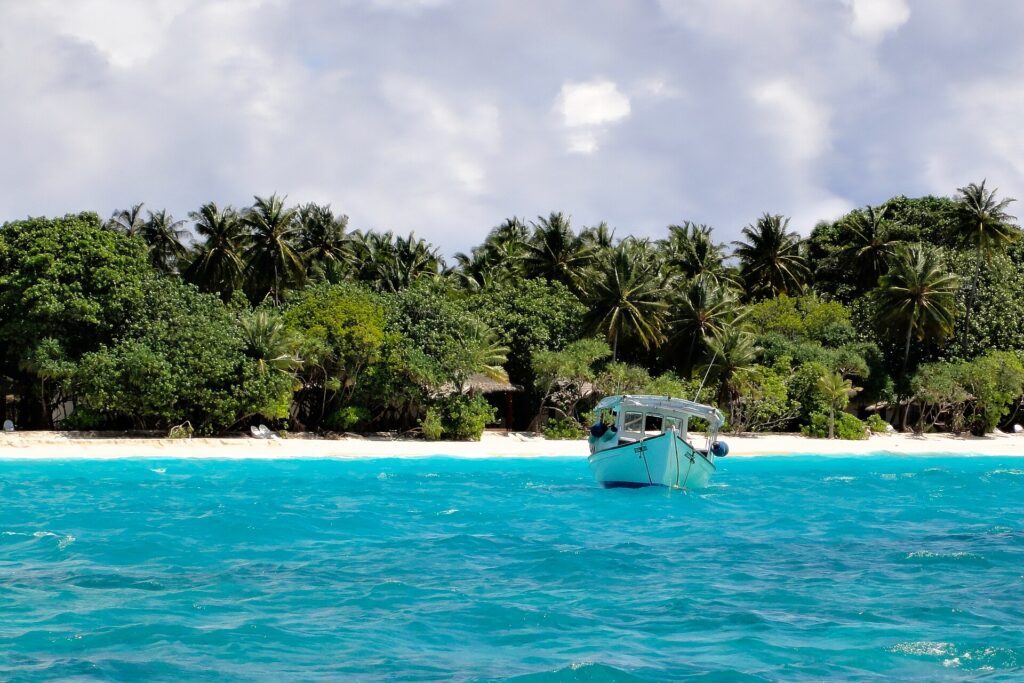
Main islands and places
Lhaviyani Atoll
A resort-led atoll with 13 resorts and only five guesthouses at the end of 2024. Divers come for current-swept channels, house reefs and The Shipyard, two coral-covered wrecks near Felivaru, home to the country’s only fish cannery. Transfers are by seaplane or domestic flight to Madivaru plus boat. Read the Lhaviyani Atoll guide.
Noonu Atoll
A quieter resort atoll with eight resorts at the end of 2024, developed as a high-end tourism zone around Maafaru International Airport. Its reefs are known for dense schools of reef fish and a substantial spinner dolphin population. A few guesthouses operate on its local islands, but most visitors stay at resorts. Read the Noonu Atoll guide.
Hanimaadhoo
A long local island in Haa Dhaalu with the north’s international airport and a growing number of guesthouses. It works as a base for heritage trips into the Haa atolls, snorkelling and sandbank excursions, and slow days in a working northern community. Domestic flights also connect it with Baa and Raa. Read the Hanimaadhoo guide.
Far North Atolls
Haa Alifu, Haa Dhaalu and Shaviyani beyond Hanimaadhoo: dozens of inhabited islands, the regional city of Kulhudhuffushi and Utheemu Ganduvaru, the home of Sultan Mohamed Thakurufaanu. Each atoll had only two resorts at the end of 2024, so guesthouses and ferries shape the trip. Read the Far North Atolls guide.
Inhabited islands across the north are Muslim communities where tourism is a small part of life. GOV.UK advises covering shoulders and upper legs away from resorts, and warns that possessing alcohol outside resorts can lead to arrest and deportation. Keep swimwear to any designated tourist beach or boat trips, stay quiet near mosques at prayer times and expect fewer ferries and services on Fridays.
History and heritage in the north
The far north holds some of the most significant places in Maldivian history. Visit Maldives describes Utheemu Ganduvaru in Haa Alifu as the birthplace and home of Sultan Mohamed Thakurufaanu. After the Portuguese invaded in 1558, he and his brothers fought a long campaign of night raids from the sea, eventually retaking Malé; he ruled as Sultan until his death in 1585. The wooden palace is now a museum.
Other heritage stops highlighted by Visit Maldives include a 1963 shipwreck off Filladhoo that snorkellers can see about 15 metres down, and historic mosques in the Haa atolls. Kulhudhuffushi, the regional city, adds a market-town view of northern life, with a Saturday farmers’ market and traditions of rope-making and boatbuilding described by Wikipedia.
Treat these places as living heritage rather than attractions. Old mosques and cemeteries remain places of worship and memory for the communities around them. Dress modestly, ask before photographing, and let a local host or guide set up visits where access is by arrangement.
Opening arrangements for heritage sites in the far north are not published consistently, and ferry timetables can change. Ask your guesthouse to confirm access to Utheemu Ganduvaru and other sites, and check current RTL ferry routes before planning day trips between islands.
Getting there and around
Resort guests in Lhaviyani and Noonu usually arrive by seaplane from Velana, arranged by the resort, and seaplanes fly only in daylight (Runway Girl Network). The region also has a dense network of airports: Madivaru in Lhaviyani, Maafaru International in Noonu, Hanimaadhoo International and Kulhudhuffushi in Haa Dhaalu, Hoarafushi in Haa Alifu and Funadhoo in Shaviyani (Wikipedia, as checked September 2026).
Hanimaadhoo’s new terminal became operational on 17 October 2025 alongside a 2.7-kilometre runway (Edition.mv), and Wikipedia lists international routes to Indian cities as well as domestic links. For island-hopping, the RTL ferry network runs in two zones here: Zone 1 in Haa Alifu, Haa Dhaalu and Shaviyani since July 2023 (PSM News), and Zone 2, including Lhaviyani and Noonu, completed in August 2025 (Edition.mv). See getting around the Maldives.
Best time to visit
The Maldives Meteorological Service describes January to March as the dry northeast monsoon, with the most sunshine hours, and mid-May to November as the wet southwest monsoon; December and April are transition months, and March to mid-May is the hottest period. Average rainfall is lowest in the north of the country, at around 1,780 millimetres a year compared with about 2,220 in the south.
| Months | Weather | What it means for your trip |
|---|---|---|
| January–March | Dry northeast monsoon, most sunshine | Calmer crossings, easier ferry hops and heritage day trips |
| April–mid-May | Transition and hottest period | Warm, often settled; plan outdoor visits early or late in the day |
| Mid-May–November | Wet southwest monsoon | Showers and wind; more boat disruptions, though diving continues |
| December | Transition | Conditions improving; holiday demand rises at resorts |
Destination guides in the Northern Atolls
Nearby regions
Read next
- Where to stay in the Northern Atolls
- Getting around the Maldives
- Maldives diving trips
- Things to do in the Maldives
- Maldives itineraries
- Maldives travel planning
Official sources for the Northern Atolls
Transfer schedules, fees, entry rules and island regulations change; check the official source before you travel.
- Visit Maldives – Historic Haa Alifu & Haa Dhaalu
- Visit Maldives – Utheemu Ganduvaru
- Visit Maldives – The Shipyard (Lhaviyani)
- Ministry of Tourism – Tourism Yearbook 2025
- Maldives Meteorological Service – Climate of the Maldives
- GOV.UK – Maldives travel advice: safety and security
- Maldives Immigration
- PSM News – RTL ferry service launches in the northern zone (Jul 2023)
- Edition.mv – RTL ferry service inaugurated in Baa Atoll (Aug 2025)
- MTCC / RTL customer portal
Plan a Northern Atolls trip
Choose between a resort stay in Lhaviyani or Noonu and a local-island trip through the far north, or combine the two.
Where to stay, and what to book
Browse accommodation across the Northern Atolls to compare resorts in Lhaviyani and Noonu with guesthouses on Hanimaadhoo and in the far north. Our where to stay in the Northern Atolls guide explains which base suits which trip, and Maldives tours and activities covers excursions.
A few places to stay in Northern Atolls
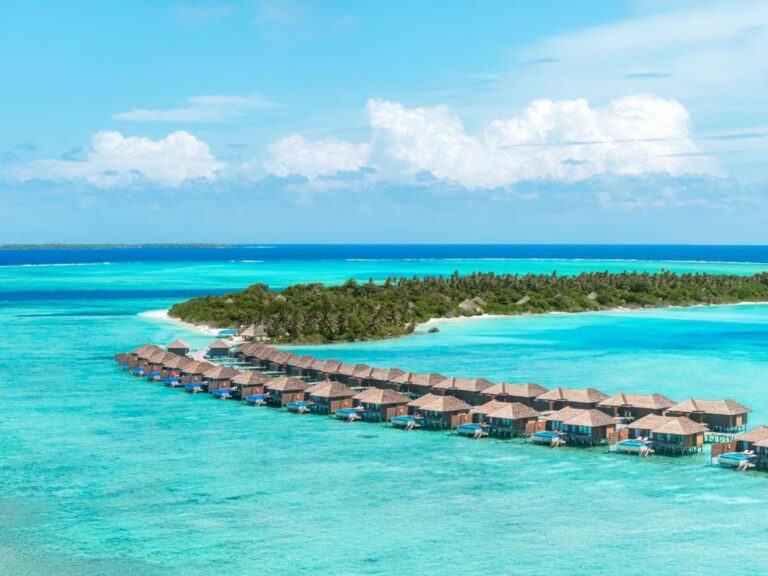 Hideaway Beach Resort & SpaView accommodation →
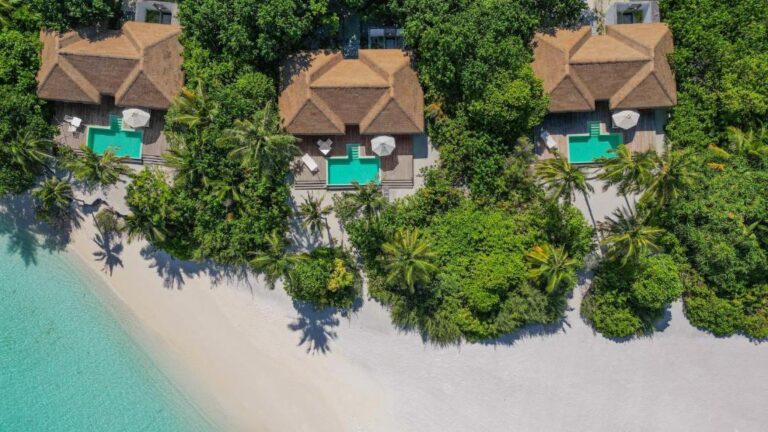 Noku Maldives, Vignette Collection by IHGView accommodation →
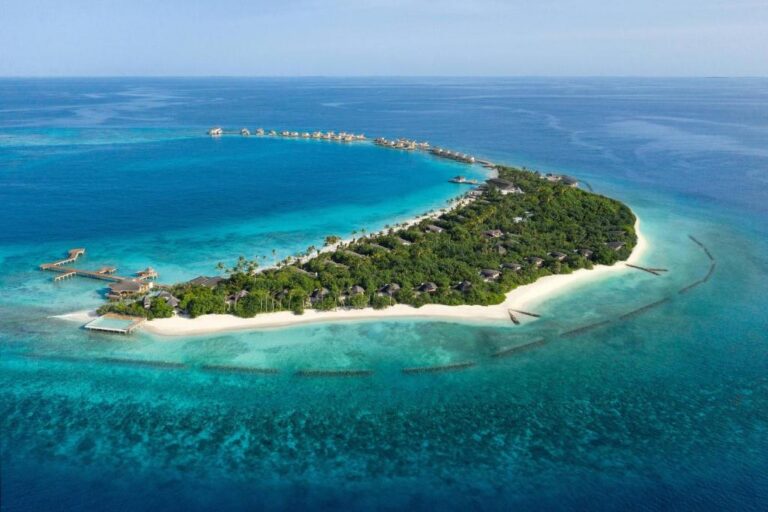 JW Marriott Maldives Resort & SpaView accommodation →
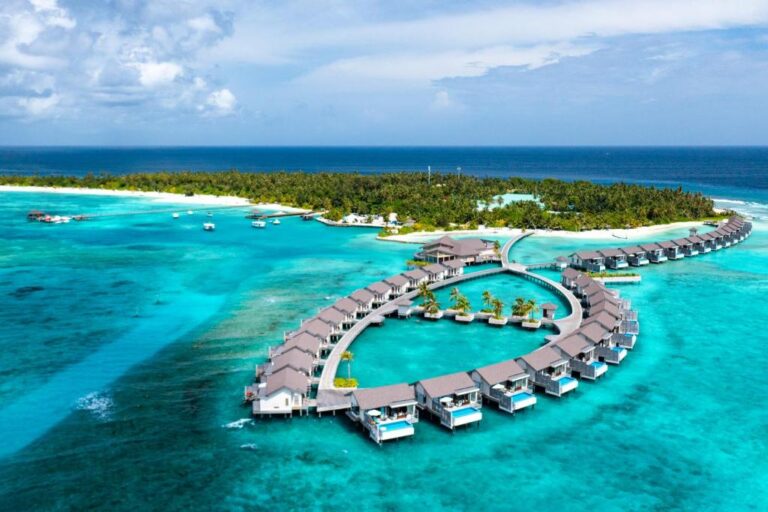 Atmosphere KanifushiView accommodation →
This opens a live search for every place to stay in Northern Atolls on an independent booking site. It is a destination search, not the availability of one property.
Affiliate disclosure: availability searches open on independent booking sites through Stay22. Maldives Travel Guide may earn a commission on a qualifying booking, at no extra cost to you.