

South Malé Atoll
Three local islands and a string of resorts just south of Malé, with short speedboat transfers, protected shark channels and seasonal surf.
Photo: Luka Peternel, CC BY-SA 4.0, via Wikimedia Commons
South Malé Atoll is the natural atoll directly south of the capital, part of the Kaafu administrative atoll and separated from North Malé Atoll by the Vaadhoo Kandu channel. It is one of the most accessible parts of the Maldives: every island here, local or resort, is reached by boat from Malé or the airport, without the need for a seaplane or domestic flight.
The atoll has three inhabited local islands, Maafushi, Guraidhoo and Gulhi, plus a string of private resort islands. That mix makes it a natural place to compare the two ways of staying in the Maldives, or to combine them in one trip, with dive channels and surf breaks close at hand.
South Malé Atoll at a glance
- Atolls covered
- South Malé Atoll, part of Kaafu administrative atoll
- Main destinations
- Maafushi, Guraidhoo, Gulhi and the South Malé resort islands
- From Malé
- Public ferry to local islands (not on Fridays); speedboats to local and resort islands
- Suggested stay
- 3 to 7 nights
- Best time
- January to April for calmer seas and diving; April to October for surf
- Known for
- Guesthouse stays near Malé, channel diving with reef sharks, outer-reef surf breaks
In this South Malé Atoll guide
Why visit South Malé Atoll
South Malé’s main advantage is proximity. Boat transfers from the airport are short compared with the outer atolls, so you lose less of your holiday to travel and can often reach your island on the day you land. That suits short trips, first visits, and travellers who want to split a holiday between a local island and a resort without adding flights.
It also offers real variety within a small area. Maafushi is the country’s busiest guesthouse island, Guraidhoo and Gulhi are much quieter, and the resorts range from dive-focused islands to large family properties. Below the surface, protected reef channels attract reef sharks and rays, and the outer reef has surf breaks that work from about April to October.
The trade-offs, honestly: being close to Malé means more boat traffic, busier excursion sites and less of the remoteness people associate with the Maldives. Beaches on the local islands are small, and dress and alcohol rules apply there. If you want empty reefs and long transfers do not bother you, the Central Atolls or Ari are worth comparing.

Main islands and places
Maafushi
The Maldives’ largest guesthouse island by beds, with around 4,500 residents, a designated bikini beach and a harbour full of excursion boats. It offers the most choice of rooms, food and day trips in the atoll, and the busiest atmosphere. Good for first visits and short stays; less so if you want quiet.
Guraidhoo
A smaller local island near the atoll’s southern rim, beside Guraidhoo Kandu, a channel protected since 1995 and known for grey reef and whitetip reef sharks. Surf breaks on the outer reef are a short boat ride away. It has fewer guesthouses and a calmer village than Maafushi.
Gulhi
A tiny island of just under 1,000 residents, close to Malé and a short way north of Maafushi. It has a handful of guesthouses and a small screened bikini beach. Choose it for a quiet local-island stay with easy transfers, and use neighbouring islands when you want more choice.
South Malé Resort Islands
Private islands, each run by a single resort and reached by speedboat from the airport. Our guide explains how meal plans and transfers work, what to compare between properties, and why South Malé suits short stays and two-resort holidays. Individual resorts are compared in the accommodation listings.
Maafushi, Guraidhoo and Gulhi are Muslim communities. Alcohol is not available and must not be brought ashore. Wear swimwear only on designated tourist beaches, cover shoulders and upper legs elsewhere, and avoid eating or drinking in public in daylight during Ramadan. Friday is the day of midday prayers, and public ferries do not run.
Channels, sharks and surf
South Malé Atoll’s rim is broken by kandu, channels where tidal currents flow between the lagoon and the open ocean. Currents carry nutrients that draw in reef sharks, rays, turtles and schooling fish, which is why channel dives here are popular. Embudhoo Kandu and Guraidhoo Kandu have been protected marine areas since 1995, and Guraidhoo Kandu is recognised by the IUCN Shark Specialist Group as an Important Shark and Ray Area.
Kandooma Thila, a pinnacle in the middle of a channel on the eastern side, is another well-known site, where reef sharks patrol and schools of jacks and barracuda gather. Divers generally find the calmest conditions and clearest water on the eastern channels in the drier months, roughly January to April. Most channel dives are drifts, so they suit divers with some experience and good buoyancy control.
Surfers come for the outer-reef breaks that work in the south-west monsoon, from about April to October. Named waves include Riptides, a right-hander near Guraidhoo, the fast and hollow Natives or Foxy’s, and Guru’s near Gulhi. Some breaks lie close to resort islands, so check current access arrangements with a local surf guide before you plan your trip around a particular wave.
Maldivian law limits recreational diving to 30 metres, permits only no-decompression diving and bans solo diving. UK travel advice notes that many islands are over an hour from a recompression chamber and warns about boat propellers near swimmers. Confirm your dive centre’s emergency plan, carry proof of certification, and check ferry timetables with MTCC close to your travel date.
Getting there and around
All journeys start at Velana International Airport or Malé. Resorts arrange speedboat transfers from the airport. For the local islands, the MTCC public ferry is the cheapest option and runs every day except Friday (as checked September 2026), while scheduled and private speedboats are much faster and are what most guesthouses book for arriving guests. Check timetables near your travel date, since schedules change.
Moving between South Malé’s islands is usually by speedboat or excursion boat rather than public ferry. Travelling on to another atoll generally means going back via Malé, though private speedboats can link South Malé with Vaavu to the south. Weather can delay or cancel small-boat crossings, especially in the south-west monsoon, so leave a buffer day before an international flight. See getting around the Maldives.
Best time to visit
The Maldives Meteorological Service describes two seasons: the drier north-east monsoon from about January to March and the wetter south-west monsoon from mid-May to November, with December and April as transition months. Temperatures stay between about 25 and 32°C all year. Dry-season months are popular for calm seas and diving, while the wet season is the main surf season; showers tend to be heavy but short, with sunny spells in between.
Destination guides in South Malé Atoll
- Maafushi: the largest guesthouse island in the Maldives
- Guraidhoo: a quieter island by a protected shark channel
- Gulhi: a small, low-key island close to Malé
- South Malé Resort Islands: how resort stays work in the atoll
Nearby regions
Read next
- 7-day Malé and South Malé itinerary
- Maldives snorkelling tours
- Maldives diving trips
- Sandbank and island-hopping tours
- Maldives travel planning
Official sources for South Malé Atoll
Transfer schedules, fees, entry rules and island regulations change; check the official source before you travel.
- MTCC Raajje Transport Link: public ferry routes and schedules
- Maldives Airports Company: Velana International Airport
- Maldives Immigration: entry requirements
- EPA Maldives: Protected Areas of Maldives (2019)
- Ministry of Tourism: Maldives Recreational Diving Regulation
- Maldives Meteorological Service: climate of the Maldives
- UK FCDO travel advice: Maldives safety, security and local laws
- Ministry of Tourism: Tourism Yearbook 2025
- Visit Maldives (official destination marketing)
Plan a South Malé Atoll trip
Choose between a guesthouse on a local island and a resort island, then plan transfers around your flight times.
Where to stay, and what to book
South Malé’s accommodation splits between guesthouses on Maafushi, Guraidhoo and Gulhi and resorts on their own islands. Our where to stay in South Malé Atoll guide compares the options by budget and travel style, and you can browse all South Malé Atoll accommodation. For excursions, see Maldives tours.
A few places to stay in South Malé Atoll
 Summer Villa Guest HouseMaafushiView accommodation →
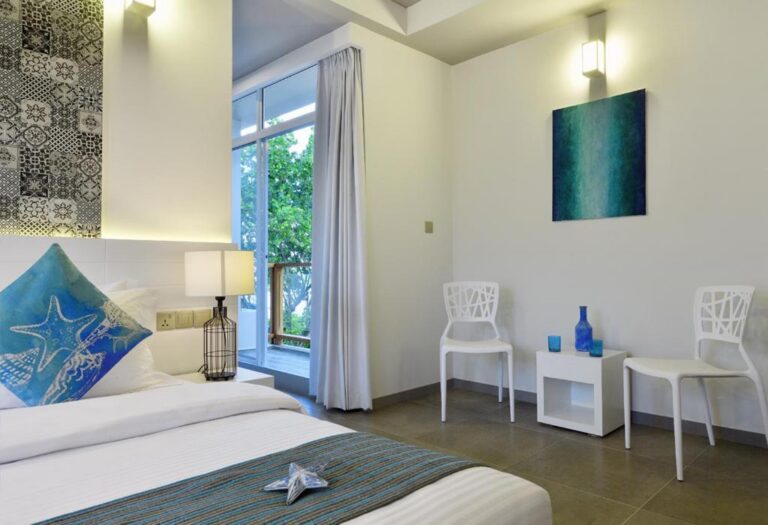 Velana Beach Hotel MaldivesMaafushiView accommodation →
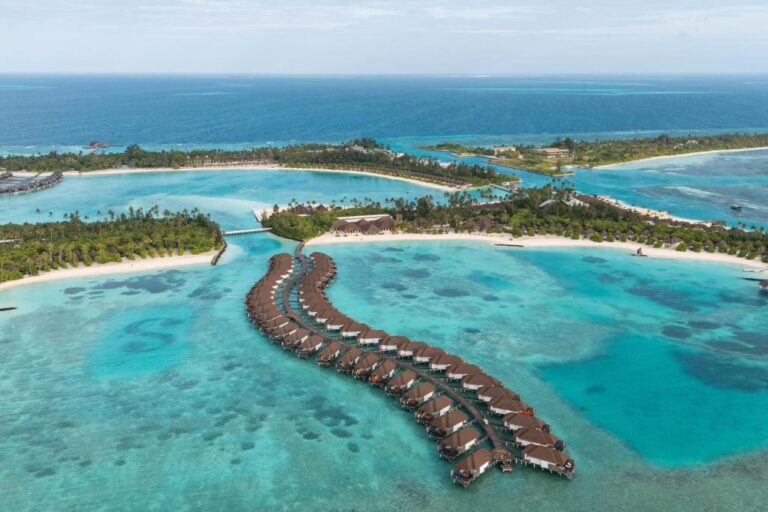 Sun Siyam OlhuveliOlhuveliView accommodation →
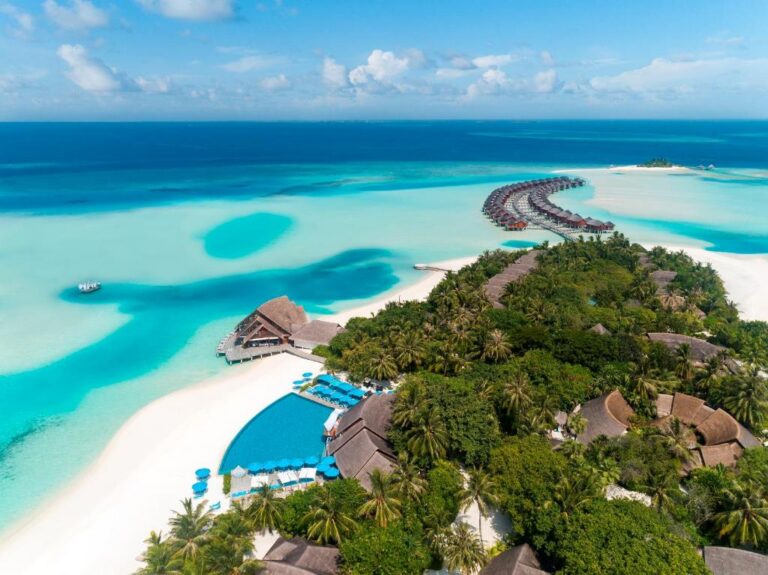 Anantara Dhigu Maldives ResortView accommodation →
This opens a live search for every place to stay in South Malé Atoll on an independent booking site. It is a destination search, not the availability of one property.
Affiliate disclosure: availability searches open on independent booking sites through Stay22. Maldives Travel Guide may earn a commission on a qualifying booking, at no extra cost to you.