
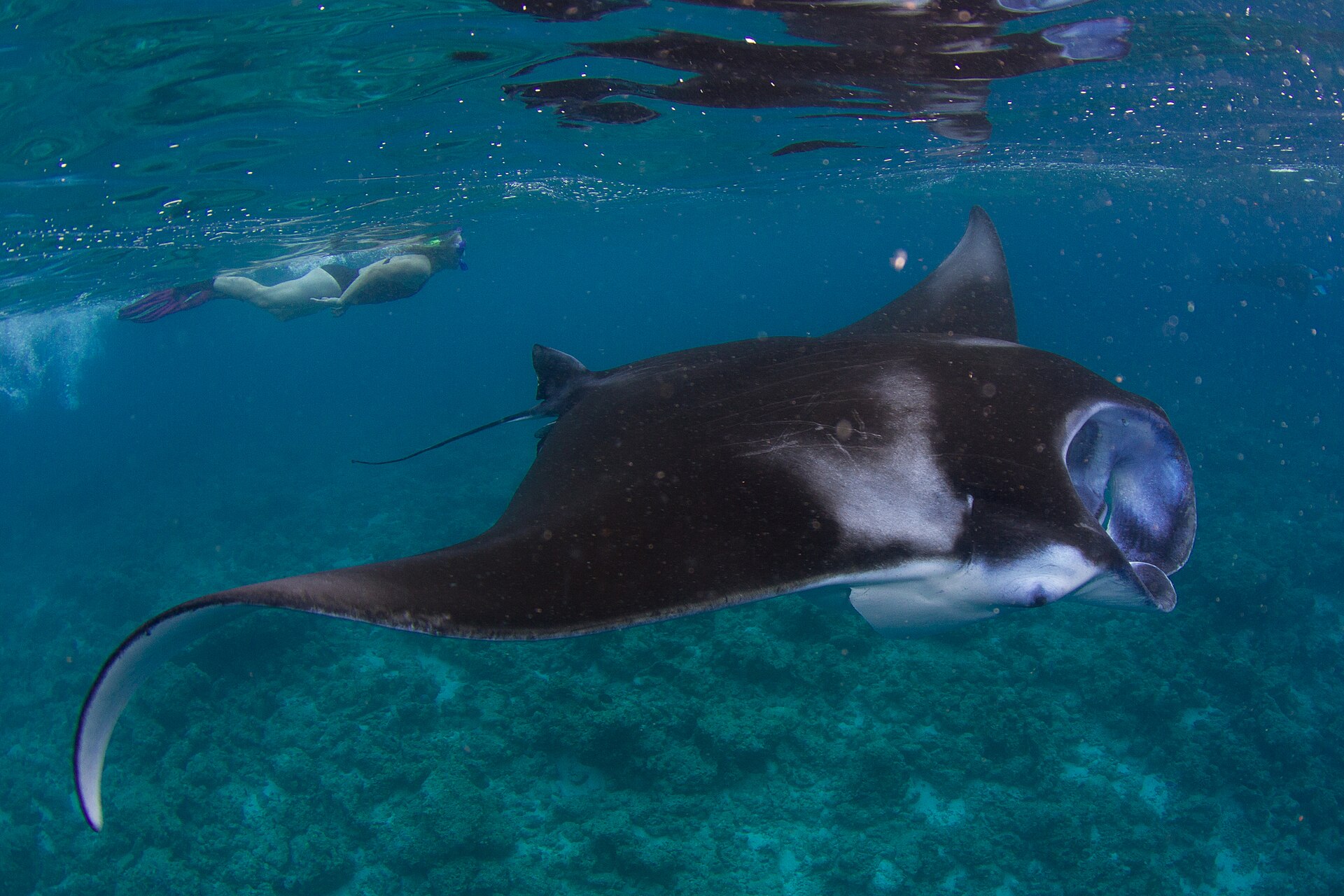
Dharavandhoo
A small local island with its own airport, and the practical base for snorkelling Hanifaru Bay in Baa Atoll’s manta season.
Photo: Tchami, CC BY-SA 2.0, via Wikimedia Commons
Dharavandhoo is a small inhabited island on the eastern side of Baa Atoll, and the local island most travellers use as a base for Hanifaru Bay, the protected lagoon where reef manta rays gather to feed during the southwest monsoon. It also has its own domestic airport, which makes it one of the more straightforward local islands to reach outside the Malé atolls.
This is a working community of around a thousand residents, not a resort. Guesthouses sit among homes, mosques and shops, and the rhythm of the day follows prayer times and the fishing and transfer boats. Come for snorkelling with a licensed guide, quiet evenings and a front-row position inside a UNESCO biosphere reserve; do not come expecting bars, nightlife or a long resort-style beach.
Dharavandhoo at a glance
- Region
- Baa & Raa Atolls
- From Malé
- Domestic flight to Dharavandhoo Airport; speedboat transfers are also arranged by some accommodation
- Island type
- Inhabited local island with guesthouses and an airport
- Suggested stay
- 4–7 nights, longer in manta season
- Best time
- May to November for Hanifaru mantas; January to March for the driest weather
- Known for
- Hanifaru Bay, reef manta rays, whale sharks in season, Baa Atoll Biosphere Reserve
- Getting around
- On foot on the island; boats for excursions, arranged through your accommodation
In this Dharavandhoo guide
Why visit Dharavandhoo
The main reason is access. Hanifaru Bay is a small, strictly managed site in the Baa Atoll Biosphere Reserve, and entry is limited to a handful of boats and a capped number of people at any one time. Staying on a nearby local island lets you respond to conditions: the bay is at its most active when tides and plankton line up, and guides based close by can go out when the timing looks right rather than on a fixed excursion slot.
The second reason is cost and pace. A guesthouse stay on Dharavandhoo is a different trip from a Baa resort: simpler rooms, shared or set meals, no alcohol and a community around you. For many snorkellers that trade-off is worth it. The island is also a convenient gateway, because Dharavandhoo Airport links Baa with Malé and with other northern airports on the domestic network.
Trade-offs, honestly
- Hanifaru is seasonal and weather-dependent; there are no guarantees of mantas on any given day.
- The island is small and residential, so beach space for swimwear is limited and rules on dress apply.
- Evenings are quiet, and alcohol is not available on local islands.
- Access to Hanifaru has occasionally been affected by local disputes or restrictions, so arrangements can change at short notice.
Hanifaru Bay
Hanifaru Bay lies on the eastern flank of Baa Atoll. Visit Maldives describes it as the site of some of the largest gatherings of manta rays in the world, with up to a hundred animals in a single congregation. The bay was declared a Marine Protected Area on 8 June 2009, and it became a core area of the Baa Atoll Biosphere Reserve when UNESCO designated the atoll in June 2011, according to the CMS Sharks MOU factsheet and the Save Our Seas Foundation.
The aggregations follow the southwest monsoon. Between May and December, strong lunar tides push against the monsoon current and trap plankton inside the bay, and reef mantas and sometimes whale sharks come in to feed. The Important Shark and Ray Area assessment describes Hanifaru as the largest known feeding aggregation of reef manta rays in the world, and notes courtship and “cyclone” feeding, where many mantas circle together to concentrate prey.
The rules at Hanifaru
A management regulation has applied at Hanifaru since 2012, and on-site rangers enforce it. The CMS factsheet summarises the main rules as follows (as checked September 2026), and your guide will brief you on the details before you enter the water:
- Snorkelling only: scuba diving and fishing are banned inside the protected area.
- A maximum of five vessels and 80 tourists in the bay at any one time, with a limit on time spent in the bay.
- Snorkellers must be accompanied by a certified Hanifaru guide, with one guide for every ten snorkellers.
- A per-visitor entry fee is charged and goes to the Baa Atoll conservation fund; confirm the current amount with your accommodation, because published figures vary.
- Heavy fines apply for breaches, and rangers patrol the site.
Hanifaru is managed by the Baa Atoll Biosphere Reserve Office in Eydhafushi. In September 2025 a local island council temporarily banned swimming and diving within 700 metres of Dhonfanu reef, next to the bay, during a dispute over a reclamation project (Edition.mv). Ask your guesthouse or guide how access is working before you book a manta-focused trip.
Snorkelling etiquette with mantas
Visit Maldives publishes a manta code of conduct. Enter the water quietly at least ten metres from the animals, keep at least three metres away, and let mantas come to you rather than chasing them. Never touch a manta, and approach from the side so they have a clear path. At Hanifaru the water is often thick with plankton and full of snorkellers, so listen to your guide and keep your fins below the surface.
Other reefs and marine life
The reserve protects far more than one bay. Visit Maldives records more than 1,200 reef-associated species and around 250 species of coral across Baa, and the waters around Dharavandhoo, including Dharavandhoo Thila, are protected. Because Hanifaru is closed to scuba, divers use licensed dive centres in Baa for thilas and channels elsewhere in the atoll. Outside manta season, snorkelling trips focus on reefs, turtles and sandbanks; see our snorkelling tours guide.
Island life and etiquette
Dharavandhoo is a Muslim community, and the usual local-island rules apply. GOV.UK advises that shoulders and upper legs should be covered away from resorts, that alcohol is restricted to resort islands and must not be taken onto inhabited islands, and that nudism and topless sunbathing are not allowed anywhere in the country. Swimwear is only appropriate on a designated tourist beach, if the island has one, or on excursions.
Ask your guesthouse whether there is a designated bikini beach and exactly where its limits are, because arrangements on small islands change. Be quiet near mosques during prayer times, ask before photographing people, and expect some shops to close briefly for prayers. During Ramadan, avoid eating, drinking or smoking in public during daylight. Friday is the weekly day of rest, and boat and ferry services can be reduced.
Use reef-safe habits rather than relying on labels: wear a rash vest to cut sunscreen use, never stand on coral, and do not feed fish. Take your rubbish back with you on excursions, and dress modestly when walking through the village between the beach and your guesthouse.

Getting there and around
Dharavandhoo Airport opened in October 2012 and has a single runway of about 1,200 metres (Wikipedia). Visit Maldives states that several daily flights link Velana International Airport with Dharavandhoo, with a flight time of about 20 minutes (as checked September 2026). Allow a comfortable connection after an international arrival, and check baggage allowances on domestic flights.
Some guesthouses also arrange speedboat transfers. Public ferries within Baa have been part of MTCC’s Raajje Transport Link network since August 2025 (Edition.mv), which can help with hops to other local islands; check current routes on the RTL portal. On the island itself everything is walkable. For planning connections between atolls, see getting around the Maldives.
Best time to visit
For Hanifaru, come during the southwest monsoon, which the Maldives Meteorological Service dates from mid-May to November. The CMS factsheet and Visit Maldives give the manta season as May to December. This is also the wetter, windier half of the year, so expect showers, choppier crossings and occasional cancelled boat trips. Plan several days on the island rather than relying on one excursion.
From January to March the northeast monsoon brings drier weather and more sunshine hours, which suits general snorkelling and relaxing, but the Hanifaru aggregations are not the draw at that time of year. December and April are transition months.
How long to stay
Four nights is a sensible minimum in manta season, giving you several chances at Hanifaru if the first days are quiet or rough. Five to seven nights allows time for reef trips, a sandbank day and rest days. Dharavandhoo pairs well with a few nights on Goidhoo Atoll to the south, or with a split stay at a Baa resort; our 7-day Baa Atoll manta season itinerary shows one way to structure it.
Find accommodation in Dharavandhoo
Rooms on a small island are limited, so book early for the peak of manta season and confirm how your transfer and Hanifaru trips will be arranged.
Browse places to stay in Dharavandhoo
Listings link to independent booking providers. See our affiliate disclosure.
Nearby destinations
Frequently asked questions
Can I scuba dive at Hanifaru Bay?
No. Hanifaru is a snorkel-only protected area, and scuba diving and fishing are banned inside it. Divers staying on Dharavandhoo can dive other sites in Baa Atoll with a licensed dive centre, and snorkel Hanifaru with a certified guide when conditions allow.
Am I guaranteed to see mantas?
No. The aggregations depend on tides, currents and plankton, and they vary from day to day and year to year. Staying several nights during the May to December season and keeping your schedule flexible is the most practical way to improve your chances.
Can I visit Hanifaru independently?
You need to go with a certified Hanifaru guide, and vessel and visitor numbers are capped. In practice guesthouses, dive centres and resorts arrange trips and handle the entry fee. Swimming or boating into the bay on your own is not how the site is managed.
Plan the rest of your trip
- Baa & Raa Atolls region guide
- Where to stay in Baa and Raa Atolls
- 7-day Baa Atoll manta season itinerary
- Getting around the Maldives
- Maldives travel planning
- Maldives snorkelling tours
Official sources for Dharavandhoo
Transfer schedules, fees, entry rules and island regulations change; check the official source before you travel.
- Baa Atoll UNESCO Biosphere Reserve Office
- Visit Maldives – Baa Atoll Biosphere Reserve
- Visit Maldives – Encounters with the majestic manta rays 101
- CMS Sharks MOU – Elasmobranch tourism factsheet: Hanifaru Bay
- Maldives Meteorological Service – Climate of the Maldives
- GOV.UK – Maldives travel advice: safety and security
- Maldives Immigration
- Edition.mv – RTL ferry service inaugurated in Baa Atoll (Aug 2025)
Plan a Baa & Raa Atolls trip
Compare Dharavandhoo with Goidhoo Atoll and the resort islands of Baa and Raa, then line your dates up with the manta season.
Where to stay, and what to book
Browse places to stay on Dharavandhoo to compare guesthouses, then check what each includes: airport or speedboat transfers, meal plans, and whether Hanifaru trips and the entry fee are arranged in-house. For excursions beyond the bay, see Maldives tours and activities.
A few places to stay in Dharavandhoo
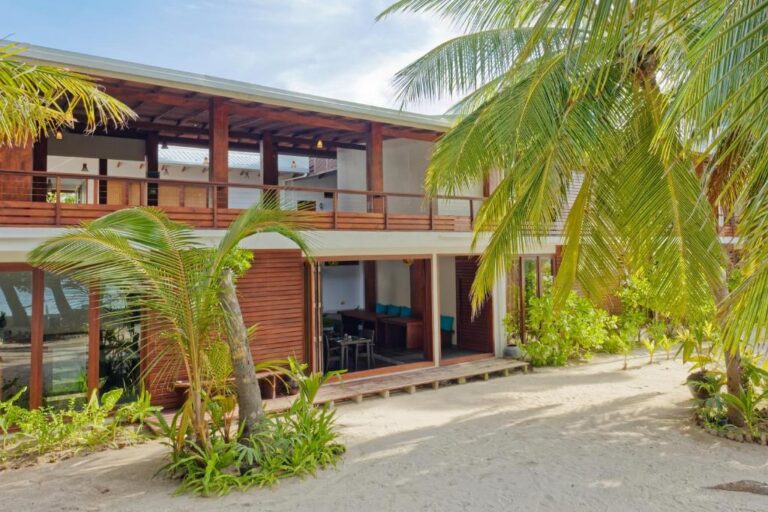 Aveyla Manta VillageDharavandhooView accommodation →LVIS blancura HotelDharavandhooView accommodation →
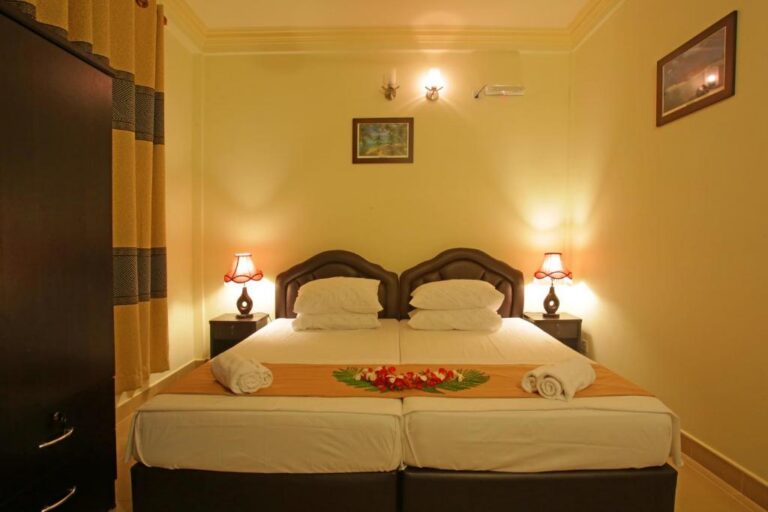 Hanifaru Transit InnDharavandhooView accommodation →
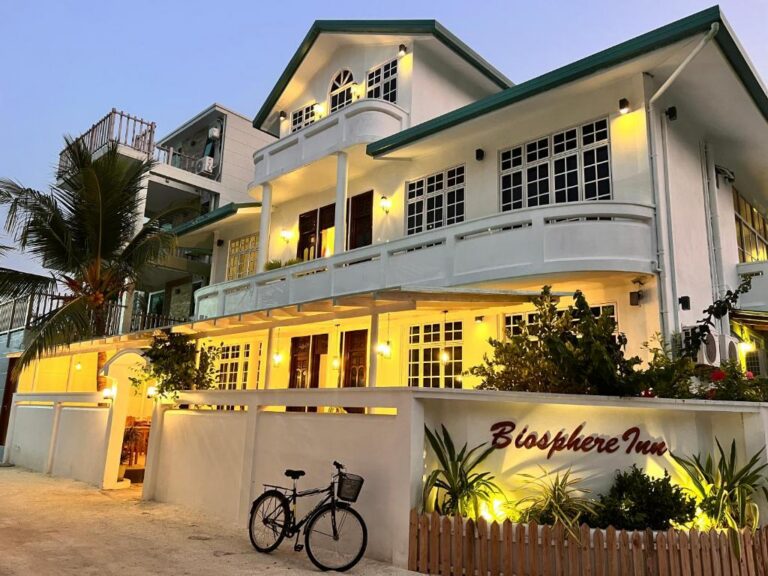 Biosphere InnDharavandhooView accommodation →
This opens a live search for every place to stay in Dharavandhoo on an independent booking site. It is a destination search, not the availability of one property.
Affiliate disclosure: availability searches open on independent booking sites through Stay22. Maldives Travel Guide may earn a commission on a qualifying booking, at no extra cost to you.