

South Malé Resort Islands
Private-island resorts a speedboat ride from the airport: how the resort model works in South Malé Atoll and what to compare before you book.
Photo: Dr. Ondřej Havelka (cestovatel), CC BY-SA 4.0, via Wikimedia Commons
South Malé Atoll is the natural atoll immediately south of Malé, separated from North Malé Atoll by the deep Vaadhoo Kandu channel. Alongside its three local islands, Maafushi, Guraidhoo and Gulhi, it holds a string of resort islands, each leased to and run by a single resort.
This page covers those resort islands as one destination. It explains how resort stays work here, what makes South Malé different from atolls further out, and what to compare between properties. Ministry of Tourism figures put Kaafu, which covers North and South Malé together, at 60 resorts at the end of 2024, about a third of the national total. We do not rank individual resorts; the accommodation listings linked below let you compare current options side by side.
South Malé Resort Islands at a glance
- Region
- South Malé Atoll (Kaafu)
- From Malé
- Speedboat transfer arranged by the resort
- Island type
- Private resort islands, one resort per island
- Suggested stay
- 4 to 7 nights
- Best time
- January to April for calmer seas and diving; April to October for surf
- Known for
- Short transfers, channel diving, surf breaks off the outer reef
- Getting around
- Resort boats; walking or buggies on the island
In this South Malé Resort Islands guide
- Why stay on a South Malé resort island
- How the resort-island model works
- What to compare between resorts
- Reefs, channels and surf
- Getting there and around
- Best time to visit
- How long to stay
- Nearby destinations
- Frequently asked questions
- Plan the rest of your trip
- Official sources for South Malé Resort Islands
- Where to stay, and what to book
Why stay on a South Malé resort island
The biggest advantage is time. Because resorts in the Malé atolls are close enough to the airport to be reached by speedboat, you avoid the wait for a seaplane or a domestic connection, and night arrivals are often possible where resorts offer them. That makes South Malé practical for short stays, for splitting a holiday between two resorts, or for travellers who would rather not spend half a day in transit.
The trade-off is that you are not far from the capital and its airport approaches, so the sense of remoteness is less than in outer atolls. Boat traffic is also busier, since excursion boats from the local islands use the same reefs and channels. If isolation matters most, compare with resorts in Vaavu or further afield.
How the resort-island model works
One island, one resort
In the Maldives, most resorts occupy an entire island, or a pair of linked islands, leased from the government. The resort controls everything on it: accommodation, restaurants, the dive centre, water sports and the beach. Unlike local islands, resorts are licensed to serve alcohol and there are no public dress-code rules on the beach, though staff are Maldivian and many are Muslim, so courtesy in public areas still matters.
Transfers and meal plans
Resorts arrange your transfer from Velana International Airport, usually by shared or private speedboat, and bill it separately or include it in a package. Rooms are typically sold on bed and breakfast, half board, full board or all-inclusive plans, and because there is nowhere else to eat, the meal plan largely decides your total cost. Check what each plan actually includes, particularly drinks, excursions and non-motorised water sports, and whether taxes and service charges are included in the quoted price.
What to compare between resorts
- Transfer: shared or private boat, whether it is included, and whether late-night arrivals are possible.
- House reef: how close the reef is to the beach, whether you can snorkel from shore, and how strong currents are.
- Rooms: beach or overwater villas, sunrise or sunset side, and how private each is.
- Diving and surf: whether there is an on-site dive centre, and whether the resort offers boat trips to nearby breaks.
- Families: kids’ clubs, pools and shallow lagoons, and any minimum ages for overwater villas.
- Meal plan: the number of restaurants and what the all-inclusive or board plans really cover.
Reefs, channels and surf
South Malé’s eastern and western rims are cut by channels where tidal currents bring in reef sharks, rays and schooling fish. Two channels, Embudhoo Kandu and Guraidhoo Kandu, have been protected marine areas since 1995, and Guraidhoo Kandu is recognised as an Important Shark and Ray Area for grey reef and whitetip reef sharks. Kandooma Thila is another well-known site. Many dives are drifts, so ask each resort’s dive centre which sites it visits and what experience it expects.
The outer reef also has surf breaks, surfed mainly from about April to October. Some sit close to resort islands, and a few resorts organise surf trips or coaching. If surfing is the point of the trip, ask how many boat trips a day the resort runs to the breaks and how crowding is managed. For non-surfers, the same months bring more wind and rain, though showers are usually short.
UK travel advice warns of strong currents and boat propellers and recommends swimming only in areas resort staff identify as safe. Maldivian regulations limit recreational diving to 30 metres and ban decompression and solo diving. Ask how far your resort is from the nearest recompression chamber and how emergencies are handled.

Getting there and around
Almost every stay starts at Velana International Airport on Hulhulé island, where resort representatives meet arriving passengers and escort them to the speedboat jetty. Transfer times vary by resort and sea conditions, so check the figure each resort gives rather than relying on the map. Once on the island, you walk or use a buggy, and trips to sandbanks, local islands or dive sites go by resort boat.
Best time to visit
The Maldives Meteorological Service describes a drier north-east monsoon from about January to March and a wetter south-west monsoon from mid-May to November, with December and April as transition months. The drier months usually offer calmer seas and are popular with divers; the wetter months bring more consistent surf. Rain typically comes in heavy showers with sunny spells.
How long to stay
Four to seven nights is typical. Short transfers mean even three nights can work, which is why South Malé is often paired with a second resort further out or with a few nights on a local island. If you plan to dive most days, allow time for a no-fly interval before your flight home; your dive centre will advise on the gap.
Find accommodation in South Malé Resort Islands
Resort prices and availability shift sharply between seasons, so compare meal plans and transfer costs for your exact dates before you commit.
Browse places to stay in South Malé Resort Islands
Listings link to independent booking providers. See our affiliate disclosure.
Nearby destinations
Frequently asked questions
Do South Malé resorts use seaplanes?
Generally not. The atoll is close enough to the airport for speedboat transfers, which each resort arranges. Confirm the transfer type, time and cost directly with the resort, because arrangements differ and sea conditions affect crossing times.
Can I visit a local island from a South Malé resort?
Often, yes. Many resorts offer excursions that include a stop at a nearby local island. If you go, follow local dress rules, cover shoulders and upper legs, and remember that alcohol is not permitted on inhabited islands.
Is South Malé good for diving?
It has well-known channel dives with reef sharks and rays, including the protected Guraidhoo Kandu, and it is close enough to North Malé for day trips. Currents can be strong, so choose sites with your dive centre according to your experience.
Should I choose a resort or a guesthouse in South Malé?
A resort gives privacy, a beach without dress rules, alcohol and all facilities on one island, at a higher cost. A guesthouse on Maafushi, Guraidhoo or Gulhi costs less and shows you local life but comes with local-island rules. Some travellers split their stay between the two.
Plan the rest of your trip
- South Malé Atoll region guide
- Where to stay in South Malé Atoll
- Getting around the Maldives: ferries, speedboats, seaplanes and domestic flights
- Maldives travel planning: entry, money, etiquette and seasons
- Maldives accommodation: resorts, guesthouses and liveaboards compared
- Maldives diving trips
Official sources for South Malé Resort Islands
Transfer schedules, fees, entry rules and island regulations change; check the official source before you travel.
- Maldives Airports Company: Velana International Airport
- Maldives Immigration: entry requirements
- EPA Maldives: Protected Areas of Maldives (2019)
- Ministry of Tourism: Maldives Recreational Diving Regulation
- Maldives Meteorological Service: climate of the Maldives
- UK FCDO travel advice: Maldives safety, security and local laws
- Visit Maldives (official destination marketing)
Plan a South Malé Atoll trip
Weigh a resort stay against South Malé’s local islands, then check transfer times and meal plans for your dates.
Where to stay, and what to book
South Malé’s resorts range from compact islands with a strong diving focus to larger properties with several restaurants and extensive family facilities. Use the listings to compare villa types, meal plans and transfer arrangements for your dates. Browse South Malé resort islands, and see Maldives tours for excursions beyond what resorts offer.
A few places to stay in South Malé Resort Islands
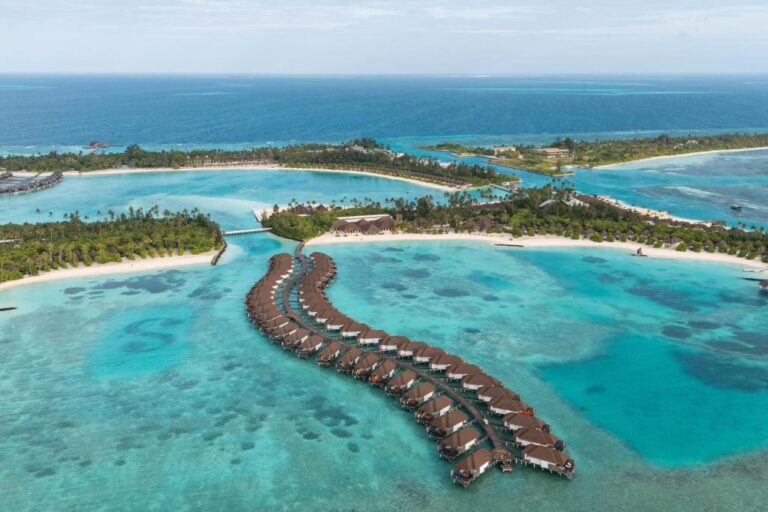 Sun Siyam OlhuveliOlhuveliView accommodation →
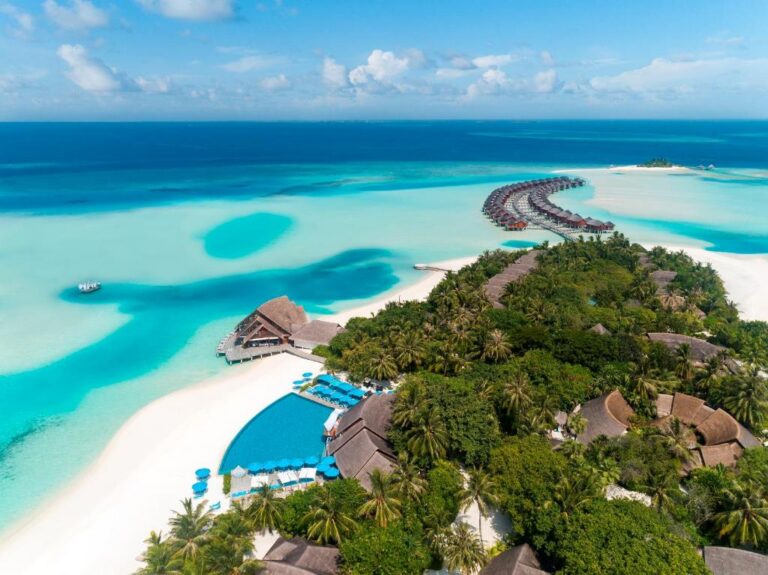 Anantara Dhigu Maldives ResortView accommodation →
 Anantara Veli Maldives ResortView accommodation →
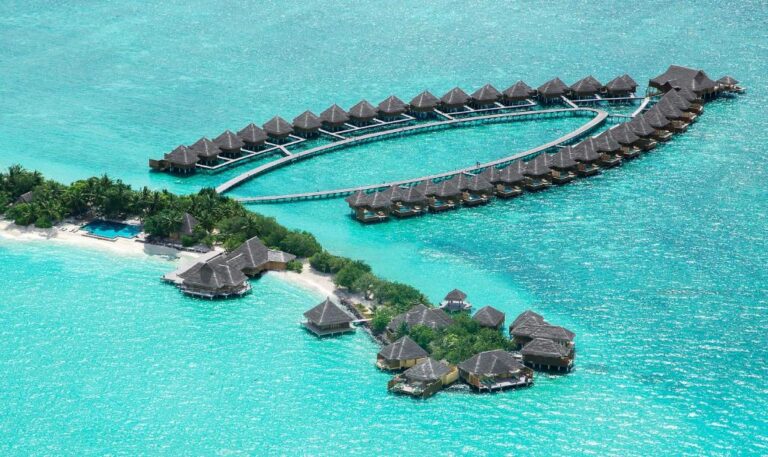 Taj Exotica Resort & SpaView accommodation →
This opens a live search for every place to stay in South Malé Resort Islands on an independent booking site. It is a destination search, not the availability of one property.
Affiliate disclosure: availability searches open on independent booking sites through Stay22. Maldives Travel Guide may earn a commission on a qualifying booking, at no extra cost to you.