

Southern Atolls
The far south of the Maldives: tiger sharks at Fuvahmulah, RAF history in Addu, vast Huvadhu and quiet Laamu and Thaa.
Photo: Asaymirus, CC BY 4.0, via Wikimedia Commons
The Southern Atolls cover the far end of the Maldives: Thaa and Laamu south of the central atolls, then, across the wide Huvadhu Kandu channel, the vast Huvadhu Atoll, the one-island atoll of Fuvahmulah and Addu, the southernmost atoll, just below the equator. It is the part of the country furthest from Malé, and almost everyone arrives by domestic flight.
What you find is a different Maldives from the resort-dense centre. Resorts are few and spread out, guesthouse tourism is concentrated on Fuvahmulah and Addu, and many islands see very few visitors. In return you get big-ocean diving, including Fuvahmulah’s tiger sharks, surf on uncrowded reef passes, protected wetlands and a history that runs from Buddhist ruins to a Cold War RAF base.
Southern Atolls at a glance
- Atolls covered
- Thaa, Laamu, Huvadhu (Gaafu Alifu and Gaafu Dhaalu), Fuvahmulah (Gnaviyani), Addu (Seenu)
- Main destinations
- Addu City, Fuvahmulah, Huvadhu, Laamu, Thaa
- From Malé
- Domestic flights to Thimarafushi, Kadhdhoo, Kooddoo, Kaadedhdhoo, Fuvahmulah and Gan
- Suggested stay
- 5–10 nights, ideally one or two atolls
- Best time
- January–March driest; diving year-round
- Known for
- Tiger sharks, reef mantas, channel diving, surf, RAF Gan history, freshwater lakes
In this Southern Atolls guide
Why visit the Southern Atolls
Come south for space and for the ocean. Ministry of Tourism figures for the end of 2024 list only around fifteen resorts across all six administrative atolls in this region, compared with dozens in Kaafu alone. Reefs, channels and surf breaks are correspondingly quiet, and the deep water close to Fuvahmulah and the channels of Huvadhu and Addu bring large marine life within reach of day boats.
The south also offers more to do on land than most of the country. Addu’s islands are joined by a 16 km link road, Laamu’s main islands by causeways, and Fuvahmulah is big enough to explore by bicycle for days. UNESCO designated both Addu and Fuvahmulah biosphere reserves in 2020, recognising wetlands, mangroves and freshwater or brackish lakes that are rare elsewhere in the Maldives.
The trade-offs are real. Getting here means a domestic flight on top of your international arrival, inter-atoll links are limited, and the southern atolls receive more rain each year than the north. Choice of accommodation is narrower, and on local islands alcohol is not available. For many travellers these are reasons to come; for others, the Malé or Ari atolls will suit better.
Most travellers pick one of two patterns. Divers and independent travellers often pair Addu City with Fuvahmulah, which are linked by ferry and flight and both have guesthouses. Resort guests more often choose a single atoll, such as Laamu or Huvadhu, and stay put. Trying to cover all five destinations in one trip usually means more time in transit than on the water.
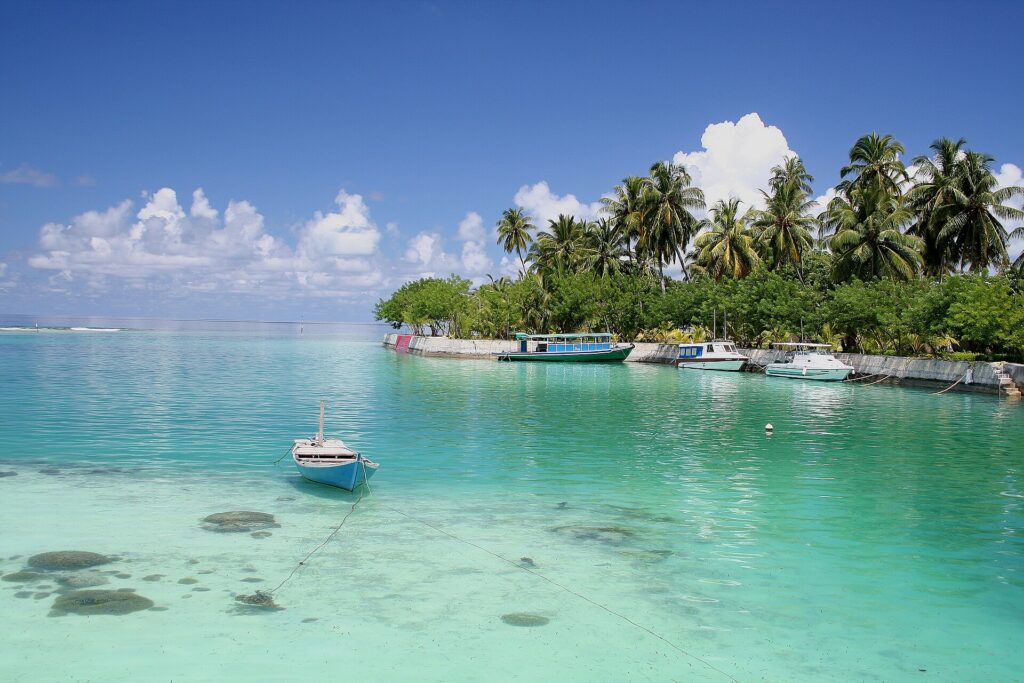
Main islands and places
Addu City
The southernmost atoll, where six districts share a road link to Gan and its airport. Addu mixes wartime and RAF history, protected wetlands and kilhis, a manta cleaning station with year-round reef mantas, and a 1940s wreck dive. It works well for non-divers too. Read the Addu City guide.
Fuvahmulah
A single island that is an atoll in its own right, with no lagoon and deep water close to shore. It is known for tiger shark dives at the harbour, freshwater lakes, the pebble beach at Thoondu and guesthouse-based local life. The shark dives come with ethical trade-offs worth understanding first. Read the Fuvahmulah guide.
Huvadhu Atoll
One of the world’s largest atolls, administered as Gaafu Alifu and Gaafu Dhaalu, with around 255 islands. Channel drift dives, reef-pass surf and resorts spread across a huge lagoon define it. Transfers are longer than elsewhere, so the choice of airport and resort matters. Read the Huvadhu Atoll guide.
Laamu Atoll
A quiet atoll where causeways link Fonadhoo, Kadhdhoo, Maandhoo and Gan. Laamu has protected turtle-nesting and seagrass sites, consistent reef breaks under south-east swell, and important Buddhist-era remains. Resorts and guesthouses are few, so plan ahead. Read the Laamu Atoll guide.
Thaa Atoll
One of the least visited atolls in the country, with thirteen inhabited islands, a single resort and a handful of guesthouses. A domestic airport at Thimarafushi and, since September 2025, public RTL ferries make it more accessible. Thaa suits travellers who want quiet and local life. Read the Thaa Atoll guide.
Outside resort islands, alcohol is not available and must not be brought in. Cover shoulders and upper legs in public, swim in modest clothing unless your accommodation confirms a designated swimwear area, and respect prayer times and the Friday holiday, when shops and ferries may pause. During Ramadan, avoid eating, drinking or smoking in public during daylight.
Sharks, mantas and ocean diving
The south is where the Maldives meets the open ocean most directly. At Fuvahmulah, UNESCO lists tiger and thresher sharks among the island’s marine life, and Visit Maldives says seven shark species are found at its dive sites. Tiger shark encounters at the harbour are baited: a government-funded review found operators use tuna heads, notes that feeding is not permitted under the national diving regulation, and calls for a shared code of conduct.
In Addu, Visit Maldives describes a manta cleaning station where reef mantas can be seen year-round, around 20 dive sites between 5 and 30 metres, and the wreck of the British Loyalty. Huvadhu’s channels are known for drift dives with grey reef sharks. Laamu’s protected sites focus on turtles, mangroves and seagrass. Across the region, currents can be strong and medical facilities are far apart.
Choose registered dive centres, ask how they run shark dives and manage group size, and carry dive insurance. UK travel advice asks divers to understand how their operator would reach one of the country’s few hyperbaric chambers. Sightings of particular species are never guaranteed, whatever an advert says; ask operators about recent conditions instead.
Getting there and around
Almost every trip starts at Velana International Airport near Malé, followed by a domestic flight south. Maldivian serves all the region’s main airports, and Gan also has international service to Colombo according to Visit Maldives (as checked September 2026). Schedules change, so book domestic legs with a generous buffer and confirm transfers with your accommodation before paying for flights.
| Airport | Atoll | Use it for |
|---|---|---|
| Thimarafushi | Thaa | Thaa local islands and resort |
| Kadhdhoo | Laamu | Laamu resorts and causeway islands |
| Kooddoo | Gaafu Alifu (Huvadhu) | Northern Huvadhu resorts and islands |
| Kaadedhdhoo | Gaafu Dhaalu (Huvadhu) | Thinadhoo and southern Huvadhu |
| Fuvahmulah | Gnaviyani | Fuvahmulah guesthouses and diving |
| Gan International | Seenu (Addu) | Addu City and Addu resorts |
Once you arrive, travel is by road where causeways exist, in Addu and Laamu, and by boat everywhere else. MTCC operates the Southern Transport Link, which Visit Maldives says runs ferries between Feydhoo in Addu and Fuvahmulah in roughly 45 to 90 minutes depending on weather, and the Raajje Transport Link now serves Thaa. Other inter-atoll links are limited, so many routings go back through Malé.
Plan the domestic legs before anything else. Choose accommodation, confirm which airport and transfer it uses, then book the flight, keeping a buffer of at least a few hours, and ideally a night in Greater Malé, between international and domestic flights. On the way home, avoid a same-day ferry crossing and international departure, since weather can delay boats in the south.
Best time to visit
The Maldives Meteorological Service describes January to March as the dry season and mid-May to November as the wet south-west monsoon. It also records about 2,218 mm of rain a year in the southern atolls, compared with 1,779 mm in the north. For calmer seas, boat transfers and ferry crossings, the drier months are the safer choice.
Marine life does not follow one calendar. Tiger sharks are reported year-round at Fuvahmulah and reef mantas year-round in Addu, while surfers target swell seasons that run through much of the year in the south. If a particular animal or wave is the reason for your trip, ask operators about recent patterns rather than relying on generic calendars.
Destination guides in the Southern Atolls
Nearby regions
Read next
- Where to stay in the Southern Atolls
- Getting around the Maldives
- Maldives diving trips
- Maldives itineraries
- Maldives travel planning
- All Maldives destinations
Official sources for the Southern Atolls
Transfer schedules, fees, entry rules and island regulations change; check the official source before you travel. The sources below were used for this guide; Visit Maldives, MTCC and the airline publish the most current transport details.
- Visit Maldives: atolls (Addu and Fuvahmulah)
- Visit Maldives: Addu connectivity
- Visit Maldives: Fuvahmulah connectivity
- UNESCO: Addu Atoll Biosphere Reserve
- UNESCO: Fuvahmulah Biosphere Reserve
- Ministry of Tourism: Tourism Yearbook 2025
- Maldives Immigration
- MTCC Southern Transport Link
- Maldives Meteorological Service: climate
- GOV.UK: Maldives safety and security
Plan a Southern Atolls trip
Pick one or two atolls, confirm domestic flights and transfers first, and leave buffer days for weather.
Where to stay, and what to book
Accommodation in the south ranges from guesthouses in Addu City and on Fuvahmulah to remote resort islands in Huvadhu, Laamu and Thaa. Browse our Southern Atolls accommodation listings to compare options, and read where to stay in the Southern Atolls to decide which atoll suits your trip.
A few places to stay in Southern Atolls
 Six Senses LaamuLaamuView accommodation →
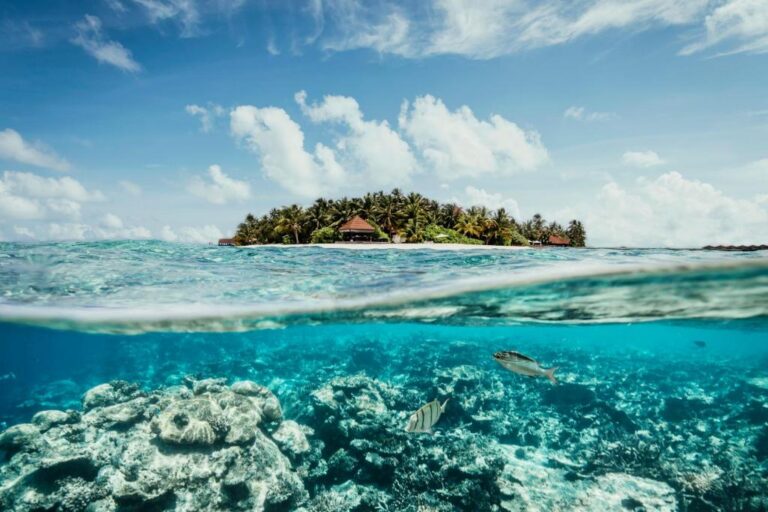 ROBINSON MALDIVESGaafu Alif AtollView accommodation →
 Park Hyatt Maldives HadahaaView accommodation →
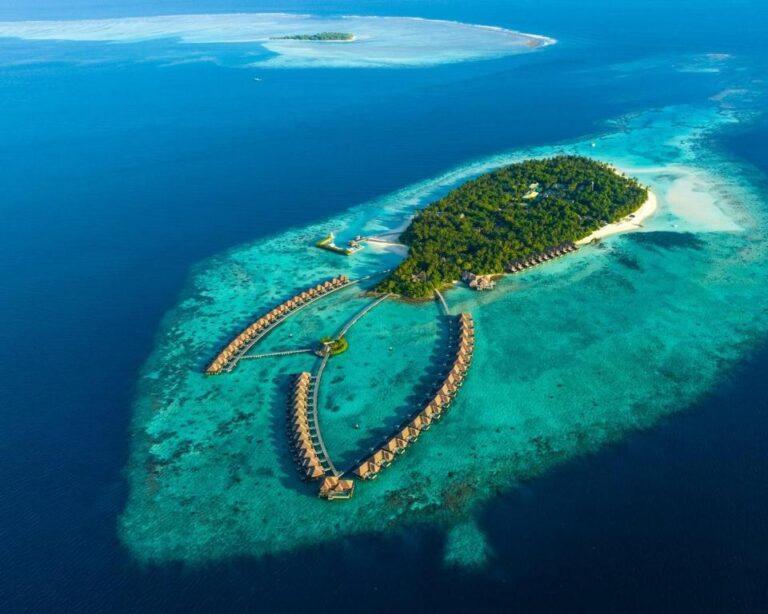 Ayada MaldivesMagudhuva IslandView accommodation →
This opens a live search for every place to stay in Southern Atolls on an independent booking site. It is a destination search, not the availability of one property.
Affiliate disclosure: availability searches open on independent booking sites through Stay22. Maldives Travel Guide may earn a commission on a qualifying booking, at no extra cost to you.